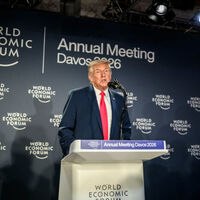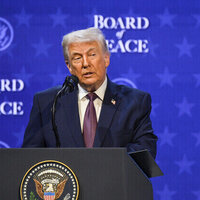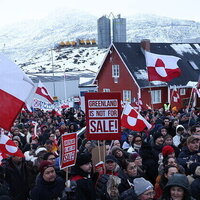


COPENHAGEN, Denmark (CN) - Throughout the many shaky periods since the end of World War II, Danes always found comfort under the wings of the U.S. But that solid relationship has been threatened by Donald Trump's stance on owning Greenland, despite his declaration this week that he won't use force to seize the Arctic island.
The giant world-defining friend across the Atlantic Ocean has long been considered Denmark's closest ally, amid geopolitical tensions and international warfare.
On the home front, Denmark has done its fair share of prioritizing the Americans. The Scandinavian country was the only one of its neighbors to support the invasion of Iraq. An internal investigation at the Danish Defense Intelligence Service found in 2015 that the U.S. used Danish support to spy on prominent political figures in Germany, Sweden, Norway and France. And those are just a few examples.
Danish Foreign Affairs Minister Lars Lkke Rasmussen said the more than two-century-old relationship will likely continue.
He was asked on Wednesday if the U.S. was still Denmark's closest ally.
"Yes, the U.S., as in the U.S., which is far more than the president, yes," he said.
His statement came just days after Denmark's minister of culture said it was hard to give that label to the U.S. given the circumstances, as Trump demanded ownership of Greenland "whether they like it or not."
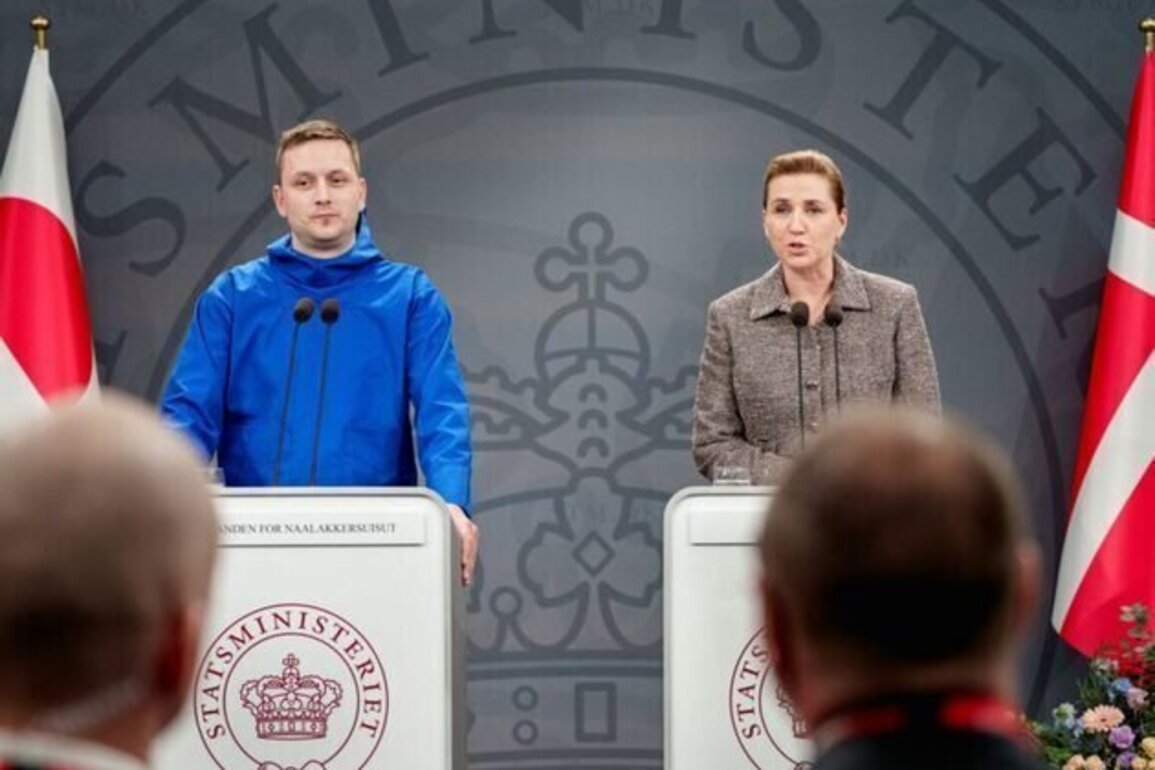
Danish Prime Minister Mette Frederiksen said Denmark and Greenland agree with the U.S. about security worries, and they're open to discussions despite "unacceptable pressure from our closest ally."
But with Trump's takeover talk, including threats he later called off to impose fresh tariffs on eight European nations if they didn't back U.S. ownership of Greenland, something shifted.
Rasmussen's comment is perhaps a reflection of the Danish view of the U.S. today.
Every year on the Fourth of July, Rebild Bakker, a hilly heathland in northern Denmark, hosts a celebration for Danish and U.S. citizens.
This year, the American ambassador and other U.S. politicians won't be welcome at the festivities, after organizers bowed to Aalborg municipality's threat last week to deny funding if U.S. officials participated.
Rebildfesten, the organizer, did not respond to a request for comment.
For the first time, the Danish Defense Intelligence Service included the U.S. as one of the external threats facing the country, in an annual security assessment report published last month. China and Russia also made the list. The intelligence service said the U.S. is using its economic and technological capabilities to wield power against allies and partners.
"There is a profound challenge with the Trump administration continuing and intensifying its pressure. That is what the Danish Defense Intelligence Service alluded to in its threat assessment, and it is clear to all," wrote Niels Byrjalsen, a postdoctoral researcher at the Center for Military Studies at the University of Copenhagen, in an email to Courthouse News.
But the U.S. remains Denmark's partner and stands as insurance for European security, the intelligence service also noted. European NATO allies are striving to meet Trump's demands of defense spending equal to 5% of GDP - a big jump from the previous 2% threshold many nations struggled to reach. Denmark will spend close to 3% in 2025-26.
All of the posturing comes against the backdrop of Russia's invasion of Ukraine.
"Even if Europeans wanted to (and many probably want to), they could not replace the U.S. role in European security in the short term. And with the Ukraine war ongoing, it would be extremely risky for Europeans to unilaterally cut ties with the U.S.," said Byrjalsen.
According to the researcher, Danish and European relations with the U.S. will remain in a future that outlasts Trump - but not in a form the world has grown accustomed to.
"Europeans are rearming and discussing strategic themes like nuclear deterrence in a manner not seen before. And over time, that will likely create a different kind of relationship to the U.S.," he said.
Observers and analysts in Denmark agree that Trump's latest Greenland takeover bluster has introduced fresh cracks into U.S. relations with the Arctic island and Denmark. Receiving what was interpreted as an invasion threat from a NATO ally, especially the U.S., seemed impossible for Danish politicians. That a U.S. president would casually jeopardize the alliance against the backdrop of an aggressive Russia seemed like fiction.
Troels Bggild, a lecturer at Aarhus University's Institute of Political Science, told Courthouse News in an email, "Greenland's relationship to the U.S. has without doubt changed, as it felt degrading to be talked about as a commodity that can be bought, an area to be annexed, or being straight overtaken by force."
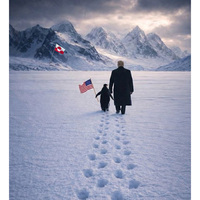
Trump had already thrown out the idea of buying Greenland during his first presidential term in 2019. His Arctic ambition took another serious turn last year, when he refused to rule out using the military to acquire the island from Denmark.
The Danish strategy was first to be careful not to confront Trump and spark further tensions, underlining the importance of NATO unity. As Trump ramped up his takeover demand this year, Denmark increased its resistance, partly by entering the playing field of U.S. politics - as when 11 U.S.congressmembers visited Copenhagen last week.
"That's how the Kingdom of Denmark showed Trump and the world how remarkable the resistance against taking over Greenland is internally in the U.S.," said Bggild.
A tiny country like Denmark, with a population of just 6 million people, needs friends to play a role in geopolitics.
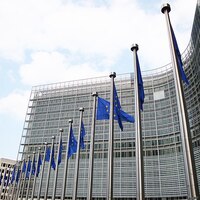
Trump's demand brought Greenland, Denmark and the EU closer, and drove them a tad further from the U.S.
It has also created rifts in the world order.
A pair of law professors from the University of Copenhagen dubbed Trump's Greenland takeover talk a "diplomatic extreme."
"A diplomatic extreme is a public diplomatic act that is so far-reaching that it challenges fundamental legal and political rules of the game. Furthermore, it unfolds on social media, so it is visible and within everyone's reach," said Mette Marie Sthr Harder, assistant professor at the Faculty of Law. She wrote a report along with Helle Krunke, law professor.
She noted that U.S. political figures repeatedly questioned Denmark's authority over Greenland, despite international agreements and the Scandinavian country's constitution declaring the world's biggest island part of the Danish Commonwealth. The fallout could trickle down globally.
"It starts to challenge international law, international agreements and constitutional principles. As Mette Frederiksen has stated, it would threaten NATO's existence should Trump fulfill his takeover wish," said Harder in a phone interview with Courthouse News.
Other nations could also see the U.S. Greenland takeover talk as a green light to take more territory. Russia is already trying to seize Ukrainian territory and China is eyeing Taiwan.
"If we're entering a new world order, where everything is more or less permitted, then no one can feel safe," Harder said.
Courthouse News correspondent Lasse Srensen is based in Copenhagen, Denmark.
Source: Courthouse News Service