

In the digital era, almost every part oflife fromcommunicationto healthcare infrastructure andbankingfunctions within an intricate digital framework, led by a handful of companies operating mainly out of the United States. If the framework collapses, so do many of the essential services that allow society to function.
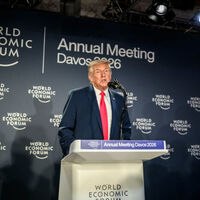
Transatlantic tensions have been steadily rising during US President Donald Trumps chaotic first year back in theWhite House. Trumps repeated demands for the Danish autonomous territory ofGreenlandand tariff threats havedriven the EU to reassess its relationshipwith its long-time ally, who may not be as dependableas was previously thought. US cooperation withEuropeisnt just key for trade and diplomacy, its also essential to maintain a robust technological and digital frontier.
Read moreDoes the US need to own Greenland to build Trump's Golden Dome missile shield?
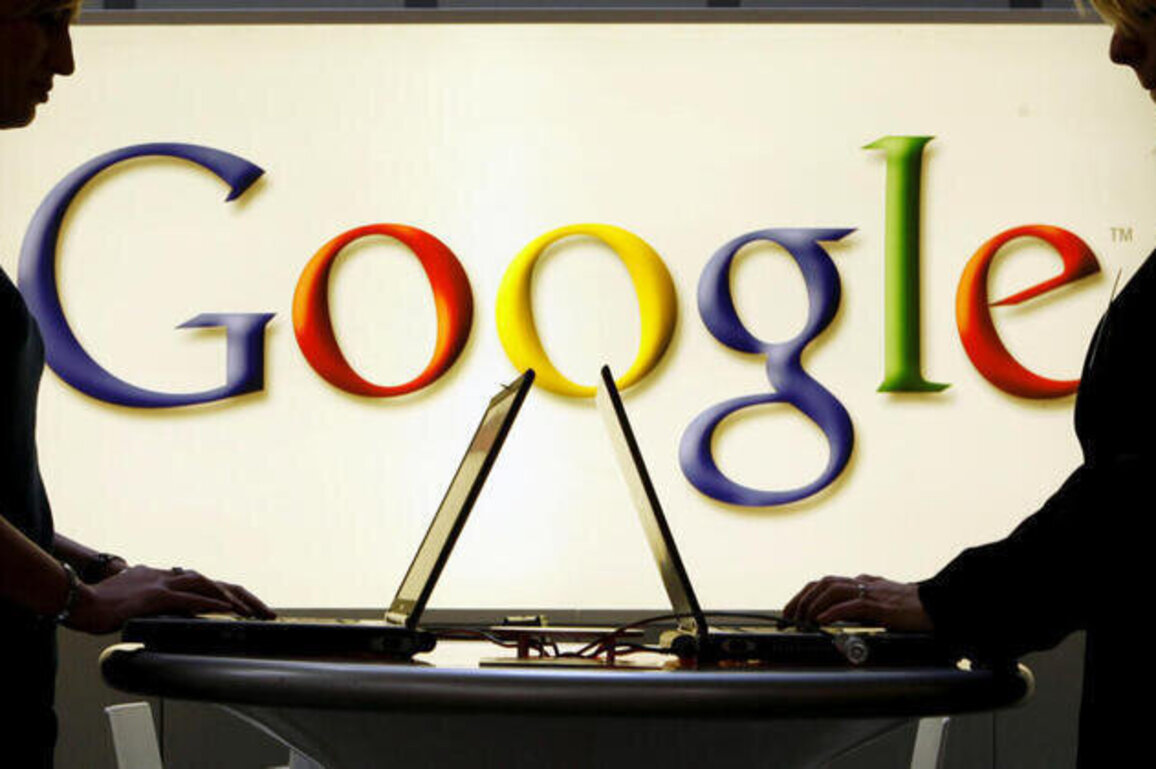
The bulk of European data is stored on US cloud services. Companies like Amazon,Microsoftand Googleown over two-thirds of the European market, while US-based AI pioneers like OpenAI and Anthropic are leading the artificial intelligence boom. According to aEuropean Parliament report, the EU relies on non-EU countries for over 80 percent of digital products, services, infrastructure, and intellectual property.
That dependency on a handful of providers has left the EU extremely vulnerable to sovereignty risks in its public and private sectors, to the point where technical issues, geopolitical disputes or malicious activity can have wide-reaching, disastrous effects.
With that fear in mind, EU lawmakers are pushing for alternatives to US BigTech, and providing homegrown substitutes toGoogle, Open AI, Microsoft and others.
EU lawmakers are pushing for digital sovereignty
According to Johan Linker, senior researcher at RISE Research Institutes of Swedenand adjunct assistant professor at Lund University, Europes complacencyhas led the bloc to a point where most of Europe runs on clouds provided by US Big Tech.
Public sector and governments have been suffering by a comfort syndrome for decades. Theres a tradition of conservative procurement culture, risk aversiveness, and preference for status quo," he said.
The difference now is that the geopolitical landscape adds a new dimension of risks to the palate beyond lack of innovation and escalating license costs.
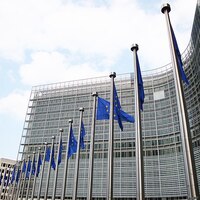
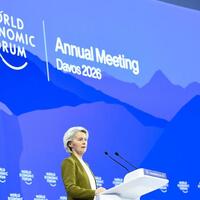
Lawmakers are scrambling to make up for that complacency. In 2024, theEuropean Commissionappointed its first "technology sovereignty, security and democracy" chief, Henna Virkkunen, whose job it is to reduce dependency and formulate policies that will keep the EU digitally secure.
Lawmakers have also rallied behind the Eurostackmovement, an initiative established in 2024 that aims to build an independent European digital infrastructure to limit the dependence of theEuropean Unionon foreign technology and US companies. It has lofty goals of cutting technological dependence, boosting industry competitiveness and driving innovation all while committing to the EUs sustainability goals.
However, an analysis by independent think-tankBertelsmann Stiftung estimatesthat it will take roughly a decade and 300 billion for Eurostack to achieve its goal. A less conservative estimate by US trade groupChamber of Progress(which includes several US Big Tech companies) estimates that the full cost would be far higher at over 5 trillion.
Time and money not will or talent are the EUs main problem.
We have a brilliant pool of skillful and entrepreneurial minds, but they require beyond substantial investments and demand to fully leverage, Linker said. Europes sovereignty hinges on its competitiveness and innovation.
Finding realistic alternatives
France,Germany, theNetherlandsandItalyhave also begun investing in open-source platforms. Open-source means that the technology hardware or software is available to be modified, reviewed, and shared.
Essentially, the open-source piece of software is free to use," Linker said. "In a public procurement you are free to point out the software explicitly and focus on buying the services needed for use. It provides a toolset for governments in growing their digital sovereignty and resilience, and increasingly recognised through upcoming strategies and legislation."
Certain websites likeSwitch to EUandeuropean-alternatives.eualso provide lists of European or "European-friendly" digital substitutes that can replace US Big Tech: Mastodon can be an alternative to Elon Musks X, Switzerlands Proton Mail can replace Gmail, etc. But habits are hard to break and these changes can only occur through a deliberate shift in mentality.
While that shift will be massive, according to Linker, it must start somewhere.
Policy-makers and governments need to lead by example by moving the public discourse and communication beyond incumbent platforms as X to options like Mastodon, which enables an open and federated infrastructure, not dependent on any single actor," he said. "But again, this is not an easy shift although in practice its not that hard."
A few pioneering projects are taking digital sovereignty seriously and leading the way to making that change concrete.
The Swedish city of Helsingborg, for example,is testing howits public services would function in the event of a digital blackout. The German region of Schleswig-Holstein has gone a step farther: the regional government has substituted its Microsoft-powered computer systems with open-source alternatives,cancelling almost 80 percent of its Microsoft licenses. Although the system isnt perfect, the Schleswig-Holstein administration hopes to phase out Big Tech almost entirely by the end of the decade.
The regional government of Schleswig-Holstein proves the fact that one can create a sovereign digital infrastructure, while working with domestic and European vendors," Linker said. "Myths regarding security and usability are no more. All of Europe should be pointing their eyes in their direction."
Read moreEurope needs 'a huge wake-up call' on the housing crisis, EU commissioner says
But weaning off US tech entirely will take its time.
Decoupling is unrealistic and cooperation will remain significant across the technological value chain, an EU digital strategyreport draft reviewed by POLITICOin June 2025 saidwhich means the EU will, for now, continue to promote collaboration with the US and other tech players includingChina,Japan,IndiaandSouth Korea.
The draft report's admission that untangling from the dominance of US tech companies is unrealistic only fuels fears about the EUs reliance on their unpredictable transatlantic ally.
If the plug gets pulled, consequences will be catastrophic. The likelihood is another question, Linker said.Either way, policy makers and governments need to realise the risk is a fact, understand the potential consequences, and start treating digital infrastructure as a critical asset.
Originally published on France24