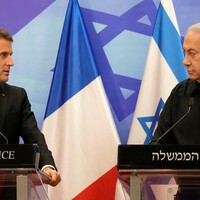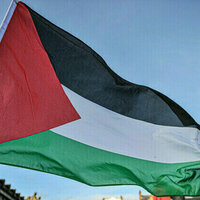


Despite heavy Israeli pressure, French President Emmanuel Macron announced Thursday that France will formally recognise the state of Palestine at a UN General Assembly in New York this September. FRANCE 24 looks back over the states long road to widespread diplomatic recognition.
From the Ottoman Empire to the British Mandate
1916Concluded in May betweenFranceand Great Britain, the Sykes-Picot Agreement marks out the two imperial powersfuture spheres of influenceacross the Middle Eastern territories of the foundering Ottoman Empire Palestine andSyriaamong them.
1917TheBalfour Declaration, named for British foreign minister Arthur Balfour, promises the establishment in Palestine of a national home for the Jewish people. The declaration, responding to the campaigning of the growing Zionist movement, follows an earlier pledge from London to Meccas Hussein bin Ali al-Hashimi promising the creation of an independent Arab kingdom following the eventual break-up of the Ottoman Empire.
1922The League of Nations, the forerunner to the United Nations, grants the United Kingdom a mandate to administer the lands of historic Palestine. The mandate document explicitly references the wording of the Balfour Declaration promoting the establishment in Palestine of a national home for the Jewish people, adding that the British would be responsible for enacting a nationality law that would allow the acquisition of Palestinian citizenship byJewswho take up their permanent residence in Palestine.
1937Following the outbreak of Arab riots the previous year against the British Mandate and rising Jewishimmigration, a report by the British Peel Commission recommends the division of historic Palestine into a Jewish state comprised of 33 percent of the territory and an Arab state connected to what was then the British protectorate of Transjordan.
A Jewish state and an Arab state
1947In February, a United Kingdom increasingly eager to renounce its role as Mandatory submits the Palestinian question to the newly formed United Nations. In November, theUNGeneral Assembly adopts Resolution 181, which calls for the division of Palestine into a Jewish state and an Arab state. The resolution, which passes despite the unanimous opposition of the Arab delegations, suggests thatJerusalemand its holy sites be placed under international administration.
1948As the British Mandate for Palestine expires, then-National Jewish Council president David Ben Gurion proclaims the independence of the State ofIsraelon May 14. The creation of the Israeli state, which soon seizes control of 77 percent of Mandatory Palestine, is synonymous for Palestinians and across theArab worldwith the Nakba, or catastrophe, which saw hundreds of thousands of peopledriven from their homes and lands by armed force. Today, more than 4 million Palestinians are registered as refugees under the UN.
1949A ceasefire brings the first Israeli-Arab war to an end, givingJordancontrol over theWest Bankof the Jordan River andEast JerusalemandEgypttheGaza Strip. Israel would henceforth take these lines of demarcation as the countrys official borders a territory far greater than that envisaged in the original UN resolution.
The same year, the UN General Assembly adopts Resolution 273, admitting Israel into the United Nations. The following year, Israel transfers its capital from Tel Aviv to the western part of Jerusalem.
1964The Palestine Liberation Organisation (PLO) is founded in Cairo. The group is empowered to negotiate and conclude international treaties in the name of the Palestinian people.
The Six-Day War redraws the map
1967The third Israeli-Arab war,or the Six-Day War, is launched by Israel, putting the armed forces of neighbouring Arab states to flight and redrawing the map of theMiddle East. Israel now occupies the West Bank, East Jerusalem, the Gaza Strip, the vastSinaiPeninsula and SyriasGolan Heights. The Israeli government begins a policy of Jewish settlement across these newly conquered territories.
1974The UN General Assembly formally recognises the Palestinian peoples right to self-determination and independent and grants the PLO observer status to the international body.
1987The First Intifada, or uprising, breaks out in the occupied Gaza Strip and soon spreads to the West Bank. Dubbed the war of stones, this revolt against the Israeli occupation will last until 1993 and place the Palestinian cause front and centre of the international agenda. The uprising also gives birth to the Islamist militant group Hamas, which calls for the destruction of the State of Israel.
1988Gathered in Algiers, the PLOs legislative assembly proclaims an independent Palestinian state with East Jerusalem as its capital. The group also implicitly recognises the existence of the State of Israel.
The Oslo Accords
1993PLOleaderYasser Arafatand Israeli prime minister Yitzhak Rabin sign the Declaration of Principles on Interim Self-Government Arrangements in Washington, D.C., following secret negotiations inNorwaythe first of a series of agreements known as theOslo Accords. These declarations are intendedto lay the groundworkfor an end to theIsraeli-Palestinian conflictand build the basis for Palestinian autonomy within the borders preceding the Six-Day War.
The first part of the agreements create thePalestinian Authority, an interim body intended to give way to an independent Palestinian state in 1999.
1995The Oslo II Accord divides the Israeli-occupied West Bank into three parts: Zone A, administered by the Palestinians, Zone B under dual administration and Zone C representing more than 60 percent of the territory which, although intended to pass progressively into Palestinian control, remains for the moment entirely under the administration of the Israeli army.
More sensitive questions, including the status of Jerusalem, Israeli settlers in the occupied territories and the right of Palestinian refugees to return to their homes, remain unresolved.
1996Yasser Arafat is elected president of the Palestinian Authority in the first Palestinian elections.
1998US PresidentBill Clintonbecomes the first US president to be officially received by a virtual Palestinian state.
Palestinian power struggles
2000The Second Intifada, also known as the Al-Aqsa Intifada, erupts following right-wingLikudparty leader Ariel Sharons provocative visit to the Temple Mount a holy site forMuslims, Jews andChristiansalike.
2002The Arab Initiative, adopted in 2002 and relaunched in 2007, foresees the normalisation of ties between Arab states and Israel in return for Israel pulling out of Arab territories occupied since June 1967 and the creation of a Palestinian state with East Jerusalem as its capital. The same year, theUN Security Counciladopts Resolution 1397, confirming its support for a two-state solution to the decades-old conflict.
2005Mahmoud Abbasis elected president of the Palestinian Authority. After 38 years of armed occupation, Israel withdraws from the Gaza Strip.
2007The Islamist groupHamas, which won the 2006 legislative elections, takes control of the Gaza Strip by force, fracturing the Palestinian leadership.
On the world stage
2011Palestinian Authority president Mahmoud Abbas formally requests Palestines admission into the United Nations. The same year, Palestine becomes a member ofUNESCO. Furious, the US staunch allies of Israel suspend their donations to the UN agency, which make up almost a quarter of its total budget.
2012The UN votes torecognise Palestine as a Non-Member Observer Statewith 138 countries for, nine against and 41 abstaining.
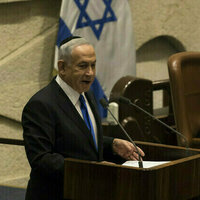
2015Faced with an Israeli prime minister LikudsBenjamin Netanyahuwho has repeatedly sworn that a Palestinian state will never see the light of day as long as he remains in power, the Palestinian Authority doubles downs on its efforts to integrate itself with UN organisations,as well as the International Criminal Court.
2016The UN Security Council adopts Resolution 2334, calling on Israel to immediately and completely cease all settlement activities in the occupied Palestinian territory, including East Jerusalem. The resolution underlines that the UN will not recognise any changes to the June 4 1967 lines, including with regard to Jerusalem, other than those agreed by the parties through negotiations.
2017The administration of US PresidentDonald Trumpannounces that the US recognises Jerusalem as the capital of the State of Israel and tells the state department tomove the US embassyto the contested city.
2019The White House unveils Trumps economic plan for the Palestinians, which despite promising to fundamentally transform the West Bank and Gaza, contains no mention of the creation of a Palestinian state.
2020Trump suggests that the creation of a Palestinian state could be possible if the Palestinians are prepared to give way to the conditions outlined in his own peace plan. His proposaloutlines a contiguous Palestinian state, connected across stretches of Israeli territory by an efficient, modern transportation network of rails and tunnels. The plan also suggests the creation of a Palestinian capital in Eastern Jerusalem without providing further details.
The aftermath of October 7
2023The deadlyOctober 7 attackslaunched by Hamas and allied militant groups on Israeli soil and the resulting Israeli onslaught in the Gaza Strip draws the worlds gaze once more to the Israeli-Palestinian conflict. The question of a two-state solution once again enters the discussion, albeit increasingly out-of-reach due to Netanyahus hardline policies, Abbass growing irrelevance, Hamass grip on Gaza and Israels renewed settlement of the occupied West Bank.
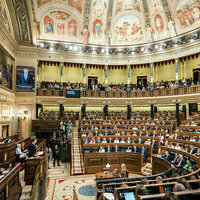
2024The UN General Assembly votes for the admission of the state of Palestine into the United Nations with a crushing majority and raises its status to Permanent Observer.Spain,Irelandand Norway all formally recognise the state of Palestine, and FrancesEmmanuel Macrondeclares himself ready to follow their example.
For its part, the Israeli government the most right-wing in the nations history announces the seizure and future settlement of the largest parcel of land in the occupied West Bank since the signing of the Oslo Accords.
2025Frances Macron affirms that recognising the state of Palestine is not just a moral duty, but a political necessity. He prepares to officially recognise the Palestinian state at a conference inSaudi Arabiain June a conference postponed following Israelsunprecedented bombing campaign of Iran.
On July 10, Macron calls for a joint recognition of Palestine betweenParisandLondonduring a visit to the United Kingdom.
On July 24, he announces that Francewill recognise the Palestinian stateat the UN General Assembly in September.
This article has been adapted fromthe original in French.
Originally published on France24