

Jack Dulgarian
Download PDF
Nov 4 2025
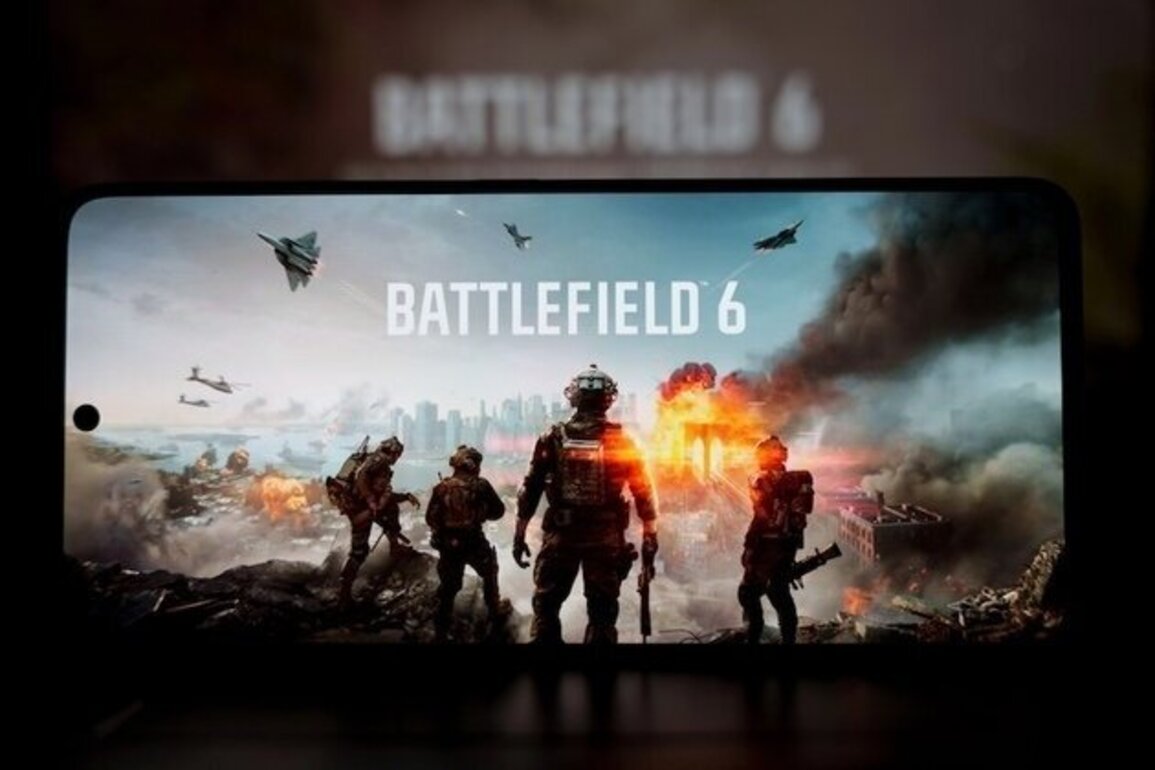
rokas91/DepositphotosWorld War III is underway and the liberal world order is officially over. NATO members have defected from Americas national security sphere in favor of outsourcing their warfighting to the mysteriousPax Armata(Armed Peace). This is not our realityyet? Game enthusiasts have long awaited the newest release of Battlefield 6 set in the near future. The games sales have shattered record revenues thus far. A former CEO from Battlefields competitor and higher grossing game franchise, Call of Duty, recently said his former titlewill sufferto Battlefields success. It will likely gross tens, if not, hundreds of millions of dollars for the publicly traded companyElectronic Arts, now purchased bySaudi Arabiajust before the games release. Why should we care about a video game depicting a fictional intra-civilizational war? In short, because millions are going to spend countless hours on Battlefield 6, a far greater amount of time on this medium of entertainment than television, film, and social media, combined. Therefore, the themes of war expressed are necessary to discuss as it will probably shape public opinion for years to come.
Yet of course, it is necessary to qualify that in most video games, mechanical design and player retention almost always upstage adherence to real simulation. Especially considering features at the tactical level, such as a playable medic with a defibrillator who can instantly resuscitate a comrade hit by a tank projectile at near point-blank range. Alsoimmortalizedby Battlefield fans, a pilot ejecting from his fighter jet, then firing a rocket propelled grenade at an enemy jet to destroy it, and free fall back safely back into his aircraft. Therefore, when speculating on the reasons for why NATO may fight a conventional war against a private military contractor (or PMC) organization in Western (or Eurasian) countries, we can only truly compare the fictional themes to modern geopolitical narratives.
In Battlefield 6s signature multiplayer mode, more than 30 players on each side fight for either American led NATO or European Pax Armata displaying the horrors of a modern conventional war fought on Western soil, including the Iberian Peninsula and Brooklyn, New York. The fictional plot begins as NATO members are leaving the alliance, outsourcing their national security entirely to Pax Armata. Yet, America and Pax overtly clash for the first time when a NATO military base inMukhrovani, Georgiaexperiences what one fictional character describes as a Pearl Harbor surprise attack, slaughtering American men and women mercilessly (Battlefield 6 probably chose real life non-NATO member Georgia as a nation-state defecting to Pax to avoid a controversial prediction of a real ally leaving Washingtons sphere). Thus begins the worst war of the 21st century, including the assassination of the NATO Secretary General and sleeper cell attacks across the continental United States.
There have been many video games which explore the concept of a modern great war between the West and Russia, China, and/or North Korea. Interestingly for our reality, a 2012 Call of Duty gamecorrectly predictedthe themes of Cold War II, drone warfare, and information campaigns leading to political violence and extremism. Moreover, Electronic Arts is no stranger to mercenary warfighting includingArmy of Two, in which the U.S. Government nearly privatizes the entire Department of Defense (Department of War) to the evil Miami-basedSecurity and Strategy Corporation. The games theme of mercenaries and a multi-national Western Civil War begs the question on the plausibility in our world. How does this scenario align with one that may happen in our reality?
It seems the game developers wanted to make Americas enemy exclusively Western. Although the game does not explicitly include details on Pax Armatas financial backers, details emerge that the Western PMC group was born out of assisting NATO militaries with their national security needs. Pax is led a British SASveteranand mercenaries shout orders in English wearing European inspireduniforms. PMCs use some Soviet/Russian and Chinese weaponry, but the majority are Western, not to mention theirvehicles.
Notably there are no confirmations of outside support, suggesting that Washingtons current real-life adversaries such as China, Russia, Iran, North Korea, and terrorist organizations are abstaining or minimally intervening in a Western Intra-Civilizational War. That is quite the plot hole! Gamers have alreadyspeculatedon these adversarial interventions from information currently presented. Some have pointed out that China and Russia have war fatigue from the fictional2020 Warwith the US (Battlefield 4).
Returning to our reality, we should look to one of the great experts on modern mercenaries,Dr. Sean McFate, a professor of war, military strategist, former U.S. Army soldier and mercenary himself. His two books, The Modern Mercenary and The New Rules of War, were developed following experiences with African warlords, the extractive industry, arms deals, and preventing genocide in the Rwanda region, according to hisbiography.
To overgeneralize McFates two recommended books, modern governments are facing challenges to field native militaries capable of projecting power and defending territory. Therefore, it is simply more affordable to outsource warfighting to private organizations who are battle tested on a variety of tactics, techniques, and procedures to fight and win. PMC prominence is nothing new, it is a return to a pre-modern era of warfare where autocrats would outsource their best military means to the strongest warriors for hire. McFatearguesthat we will soon live in an era where mercenary armies are backed by the worlds most financially powerful private individuals or institutions.
It seems that Battlefields plot was modeled after a real-life PMC conflict that could have changed history forever. The Wagner Group, a Russian PMC organization notoriously caught headlines from the late 2010s to the early 2020s. Wagner has deployed throughout many regions of Africa, once foughtagainst the United Statesin Syria, and held a very large role in the Russia-Ukraine War. The ill-famed group was led by Russian President Vladimir Putins former political ally and chef, Yevgeny Prigozhin, who (for many reasons outside the scope of this analysis) decided in 2023 to use force to remove the Russian Defense Ministry (some claimed a coup against Putin himself).
Wagnersmarchfrom Rostov-on-Don lasted only about one day and with PMCs about 200 km outside Moscow, as Prigozhin claimed. It was Wagners most consequential defeat and their permanent end as an independent Russian military force. One month later, Prigozhin, along with co-founder and neo-Nazi Dimitri Utkin would die in aplane crashfrom St. Petersburg to Moscow. ABBC judgementfrom a Russian telegram channel stated that the Wagner jet was shot down by Russian government air defense systems. Today, Wagner appears to be directly managed by the Russian Ministry of Defense.
The public-private transactional relationship from cooperation to crisis to outright conflict mirrors the NATO-Pax Armata fictious story (the author will not spoil the games ending). We have yet to see a PMC group which can match the capabilities and partnerships of Western governments, but that doesnt mean that themes of Battlefield 6s story can be taken for granted. The Wests war fatigue is very real after (1) decades of counter-insurgent unconventional wars in Somalia, Iraq, Afghanistan, Syria, Yemen and elsewhere, (2) a proxy war with Russia, (3) shadow conflicts with Iran andVenezuela, (4) a nuclear standoff with North Korea and (5) a cold war with China.
Ongoing crises are leading to fears of a catastrophic conventional war, not fought between terrorists in civilian clothing and the U.S. Military, but rather, great power nations. Battlefield 6s PMC plot may not be realistic now, but we can certainly speculate that mercenary organizations over the next decade may come to comparable power status as nation-states. This reality would be inconceivable to politicians and security experts at the time of the American unipolar moment and Soviet Union collapse. But that was then, the future is very uncertain now. The emerging new world order is making events more complex than ever before. Governments and citizens around the world have the choices of peace, war, and grand private armies. No innocent person is safe as the future of organized violence in the hands of powerful entities with advanced technology is upon us. Battlefield 6 will thematically remind us of this future while we enjoy shooting each other in the virtual representations of countries we call home.
Further Reading on E-International Relations
- Opinion NATOs Real Message to the Kremlin
- Opinion Finland and NATO Membership
- Opinion The NATO Madrid Summit and the Alliances New Dawn
- Opinion NATOs Expansion in Northern Europe Rests on Trkiye
- Opinion Estonias Kaja Kallas for NATO Secretary-General?
- Opinion The Vilnius Summit and the Future of NATO
About The Author(s)
Jack Dulgarianis a Washington, D.C. based analyst and consultant working in national security and defense focusing on the near east, eastern Europe and great power competition. This is Dulgarians second video game-geopolitical fusion analysis, previously exploring Call of Duty: Black Ops 2spredictionsfor 2025. He has been referenced by National Defense Universitys Joint Quarterly Magazine and given lectures to the State Departments Foreign Service Institute. You can follow him onSubstack.
TagsNATOVideo Games