


(CN) - After her party's drubbing in recent elections, Danish Prime Minister Mette Frederiksen finds herself in a new position: the firing line.
The Social Democratic leader acknowledged responsibility for her party's failure to maintain power after catastrophic local elections two weeks ago, including its biggest defeat: losing a 100-year old hold on Copenhagen, the capital, with mayoral losses spread across the country.
The Green Left Party's Sisse Marie Welling snatched the mayoral post from Frederiksen's Social Democrats, a powerhouse her political colleagues had been supporting for decades. The tide has turned since Frederiksen snubbed them to form a fragile coalition with center-right parties in negotiations back in 2022.
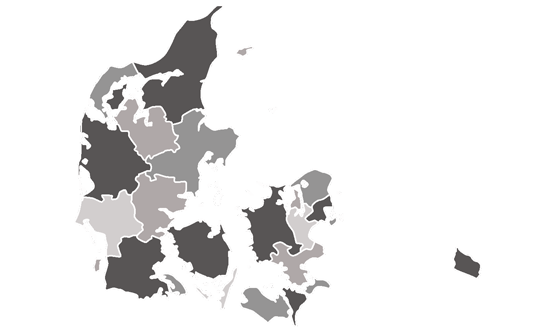
Out of Denmark's 98 municipalities, the once-mighty Social Democrats are expected to hold power in just 26, a steep fall from the current 44 that made it the party with the most mayors. That title now goes to its center-right rivals in the Liberal Party, with around 39 positions. The numbers can change due to ongoing negotiations.
The strong backing Frederiksen has enjoyed from her colleagues over her two terms as prime minister is cracking.
An opinion poll published by Danish broadcaster DR last week shows 41 nationwide Social Democratic city council members want Frederiksen to step down as chairman, in hopes of shifting the party's downward trajectory ahead of parliamentary elections next year.
While she still had the support of 130 members and 62 didn't answer, it's a first for Frederiksen to face such internal criticism.
She will now have to carefully juggle her strong international profile with her national image. The Danish prime minister is among the EU's biggest supporters of Ukraine under Russia's invasion. She has also been setting new national precedent by enhancing relations with Greenland, as U.S. President Donald Trump refuses to drop his talk of a takeover of the island.
At home, 44% of respondents said Frederiksen is doing a bad job; 29% approve of her performance, according to an opinion poll published last week, marking the party's worst results in 12 years.
"When it comes to support by the voters, the Social Democratic Party is in a crisis. They went through a bad European Parliament election and municipal election. The opinion polls can't be misunderstood," said Troels Bggild, lecturer at the Institute of Political Science at Aarhus University, in an email to Courthouse News.
Bggild highlighted the growing discontent from party members over its leadership - especially Frederiksen.
"We haven't reached a point where we're looking into a chairman switch, but that can change after a potentially bad parliamentary election," he said.
Frederiksen is serving her second term as prime minister. As the long-standing face of the government, she bears the brunt of the blame for unpopular decisions. Inflation, especially rising food prices, is also putting pressure on the leadership.
Despite winning a majority to form a traditional center-left government in the latest parliamentary election, Frederiksen formed a coalition with direct rivals, the center-right Liberal Party. Bggild said the decision did not go over well with the Social Democratic base.
Historians say the Social Democratic collapse in Denmark's bigger cities began 50 years ago. The party played a major role in building the country's current welfare state, with broad public backing in the decades after World War II. It invested heavily in health care and education. At the same time, the party conquered major strongholds in the cities.
Things changed in the 1970s. With the emergence of the Green Left Party, the Social Democrats were challenged in their pursuit of young city-dwellers. The Green Left Party and later the left-wing Red-Green Alliance seem fresher than the rusty old Social Democrats, who talk largely about maintaining their welfare creation.
In the parliamentary elections, Social Democratic power met serious contenders in the 2000s, when Denmark's Liberal Party and its right flank kept the left wing at bay. In 2015, the right-populist Danish People's Party won a whopping 21%, with its anti-immigration and pro-elder care policies. It secured a center-right government coalition again, snatching votes from the Social Democrats.
The loss was a turning point for the Social Democrats, who put Frederiksen in charge that year. They wanted no more bleeding votes to the right flank under her watch. To regain voters outside the big cities, she relied on strict immigration policies and hard rhetoric against academics and the urban middle class.
Young voters preferring high school to vocational schools were labelled "snobs." The value of university degrees was downplayed. Lecturers and students around the country called it "academics bashing." Many such voters live in big cities.
The strategy worked twice for Frederiksen and her party - keeping the prime minister position since 2019 and achieving success in both parliamentary elections. The same cannot be said about the municipal elections, where especially the Green Left Party won what the Social Democrats lost.
Copenhagen stands as the crown jewel. Voters in the capital longed for left-wing priorities and inclusive policies that Frederiksen has steered away from in the hunt for Denmark's most powerful position - which is now under threat because of her collaboration with policies associated with the right wing.
Her international profile also seems to come with a cost.
"Another factor is the government's handling of the Ukrainian war. It has made Denmark an obvious target for Russian hybrid warfare because it has donated an extraordinary amount of money to Ukraine and established cooperation for weapon production. Opposition parties and many Danes believe that it has made Denmark a target without ensuring proper self defense, such as against drone attacks," Bggild said.
Danes are starting to question Frederiksen's priorities, which some see as focused on international matters over Danish welfare and affordable food prices.
Her considerable time spent in relationship-building with Greenland, however, isn't likely to change. The Danish prime minister has made a big deal of listening to Greenlandic wishes about confronting a colonial legacy and fueling economic investments, experts say.
For the past year, Frederiksen's political attention to Greenland has trickled down to Danish society, said the Greenlandic House in Copenhagen, a cultural bridge-building group.
"There's more attention on Greenland," Director Leise Johnsen said in an email. "We are delighted about the increasing interest, which hopefully will contribute to building a nuanced view on Greenland."
For residents of the world's largest island, it matters who sits in the Danish prime minister's chair, said researcher Ulrik Pram Gad of the Danish Institute of International Studies, specializing in Greenland-Denmark relations.
"The government under Frederiksen has indeed gone to great lengths in accommodating Greenlandic demands for influence on an independent standing in international relations, within the limits of the current constitutional relation," he wrote.
While Denmark controls foreign affairs, security and defense on behalf of Greenland and the Faroe Islands, Frederiksen's administration established a committee to begin talks on those matters with each government on equal footing.
Trump's Greenland remarks have contributed to the rekindling of Denmark's relationship with its Arctic territory, led by Frederiksen, who has insisted this year that the island must decide its own fate when it comes to independence.
A January poll by DR showed only 17% of 1,016 Danes wanted to dismantle the Danish Commonwealth, making Greenland an independent nation. The rest wanted the Commonwealth to persist in one form or another.
"Climate change and recent geopolitical attention have given many Greenlanders an idea that there are alternatives to dependence on Denmark; however, Trump's advances have made most Greenlanders reason to pause and think hard on how this alternative attention can be channeled somewhere beneficial for Greenland," Gad said.
Though Frederiksen's seat remains under fire for the parliamentary election scheduled within the next year, a new prime minister will likely not radically change the ongoing relationship-building with Greenland.
"A line of Danish prime ministers has dealt with Greenland by the Machiavellian strategy of basically catering to all Greenlandic demands but doing so at the slowest possible speed. Some Greenlandic governments have quietly felt comfortable with this, given that their electorate expects them to advance toward independence, while they did not see their country ready for a dramatic jump out into the unknown," Gad said.
Should a new face take the prime minister's office next year, the government will likely continue its political trajectory with Greenland. The current government has broad support from Parliament on Greenlandic policies.
"I agree that Mette Frederiksen has met Greenlandic wishes on several topics. If a future government wants to strengthen the relationship with Greenland, it can, with great benefit, continue on the same track as her. And I expect that to happen," Bggild said.
Senior officials from Denmark, Greenland and the U.S. are set to meet on the Arctic island in early December, Washington confirmed last week.
Courthouse News correspondent Lasse Srensen is based in Copenhagen, Denmark.
Source: Courthouse News Service