

COPENHAGEN, Denmark (CN) - As the Christmas season approached in Denmark, Lrke Due Sjgren found herself looking forward to a family tradition that will no doubt sound familiar to American readers.
"Our family always decorates the Christmas tree together," she said. "Typically, we do it every year on Dec. 22, so it's somewhat of a ritual for us."
Now in her 30s, Sjgren says her family has been tree-decorating for as long as she can remember.
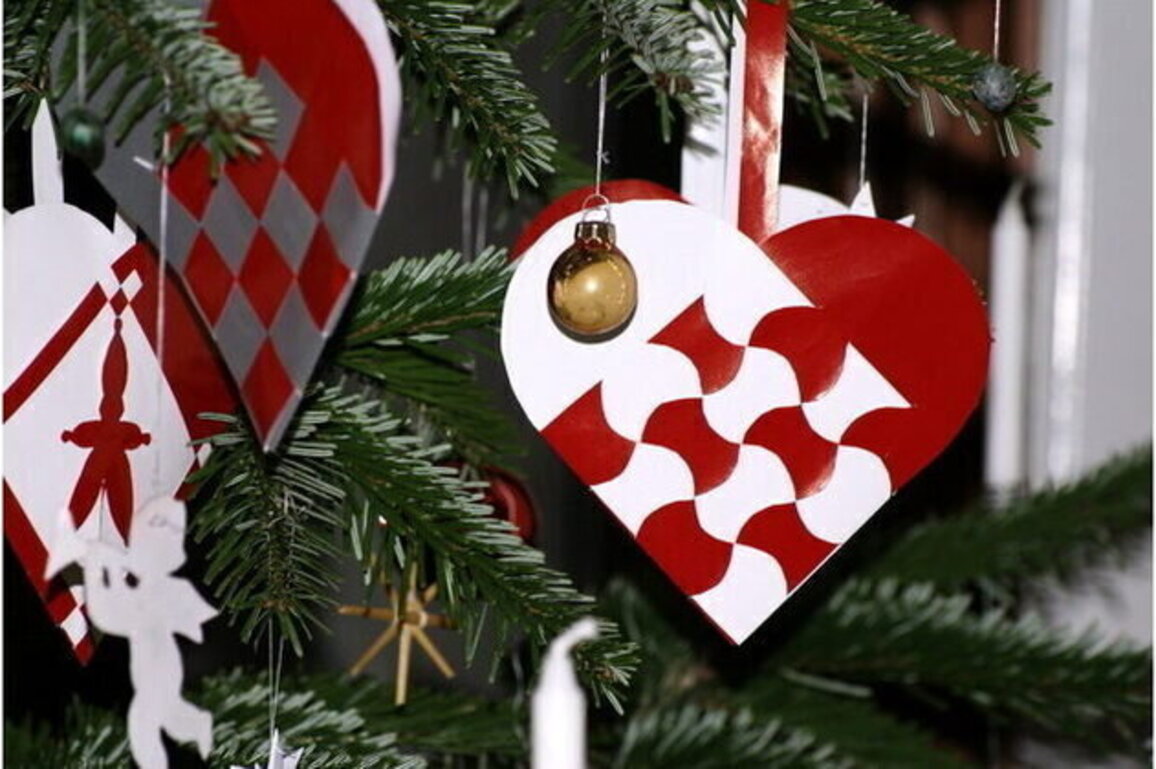
Just like in America, aesthetics can lean into the kitschy. Sjgren says her family's ornaments are less about tree beauty and more about taking a trip down memory lane.
"In my family, we've kept a lot of the Christmas stuff we created as children," she said. "Our tree holds many memories of past Christmases."
Scandinavia is one birthplace of Christmas. Pagan Yule traditions here date back centuries, forming a basis for the modern holiday.
And yet what's become one of Denmark's most iconic Christmas exports - the decorated fir tree - is a relatively new concept.
Although holiday histories can get a bit apocryphal, the tradition seems to have originated in neighboring Germany.
Danes imported the custom around the early 19th century. Historians believe the Danish capital of Copenhagen saw its first Christmas tree in 1811.
In the following decades, Danish authors, poets and songwriters incorporated the fir tree into Christmas lore, helping make the decorated fir tree both distinctly Danish and a global must-have for the holidays. Although Germany may have invented the Christmas tree, it was Denmark that truly claimed it.
Denmark is now one of the biggest exporters of Christmas trees in Europe. According to the Danish Christmas Tree Association, this country of just 6 million people sold more than 9 million Christmas trees in 2024, bringing in around $190 million.
Ironically, Germany has become one of Denmark's biggest customers. The country reserves around 50% of Danish-produced Christmas trees, with the U.K., the Netherlands and France also buying lots.
Although exports have fallen in recent years, it remains a major holiday industry. Specifically, these are Nordmann firs, which grow well in Denmark's cool and rainy climate.
In 1844, legendary Danish storyteller Hans Christian Andersen wrote "The Fir-Tree," a story about a tree that struggles to appreciate the moment because it's too eager to grow up.
It was around that time that another distinctly Danish holiday celebration was born: Dancing around the tree on Christmas Eve. Hand-in-hand, friends and family circle while singing songs about Jesus and Christmas.
"Honest to god, I don't know why we do it," Sjgren said. "You must dance around it before you're allowed to open gifts. It's a chore."
The first reference to the practice comes from the 1840s song Hjt fra trets grnne top, Danish for "From high up in the Christmas tree." The song remains common on Christmas Eve playlists in the country.
There's no clear origin story for these dances. Still, the ritual is clearly related to Scandinavian traditions of dancing around objects like maypoles, said Kirstine Helboe Johansen, a theology lecturer at Aarhus University who specializes in rituals like Christmas traditions.
The first Christmas trees here were in public squares - and from a Danish perspective, "that made it obvious for people to dance around them," Johansen said. "We know this from the Swedish maypole, and when Danish high school graduates and midwives dance around the Stork Fountain in central Copenhagen."
Johansen compared the practice to other rituals like Sunday Mass, which help create a rhythm for daily life.
"Christmas is only once per year, and it is part of a yearly cycle," she explained. "We are preparing for a new year. Sometimes with rituals, you're participating in things that do not have one-on-one impact, but it remains meaningful, because it's part of a recognizable cycle."
That doesn't mean everything is staying the same. Take Danish Christmas tree exports, which have started to shrink after steady growth from the 1980s to 2010s.
"Tree producers have fallen in numbers," said Claus Jerram Christensen, director of the Danish Christmas Tree Association. He said it likely "has something to do [with the] bad economic times of the past five to seven years." That, plus the strange economics of the Christmas tree market. It takes around eight to 10 years to grow a single fir tree to size, meaning producers must try to predict what the market will look like in a decade and plan accordingly.
Even so, decorated firs will no doubt remain a major part of Danish Christmas, whether that's in the form of ritualistic Christmas Eve dancing, a rich history of holiday songs and fables or emerging export markets.
Increasingly, customers from the Middle East and Asia are eyeing Danish greens, Christensen said. Thus, even as fewer Germans are buying Danish firs, more are instead finding their way into homes in Japan, South Korea and the United Arab Emirates, and particularly into the homes of expats. So it goes with traditions: The details may change over the years, but the core elements rarely do.
Courthouse News correspondent Lasse Srensen is based in Copenhagen, Denmark.
Source: Courthouse News Service