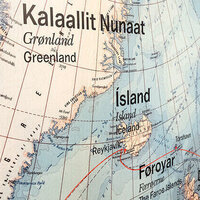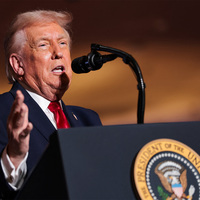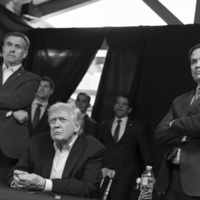


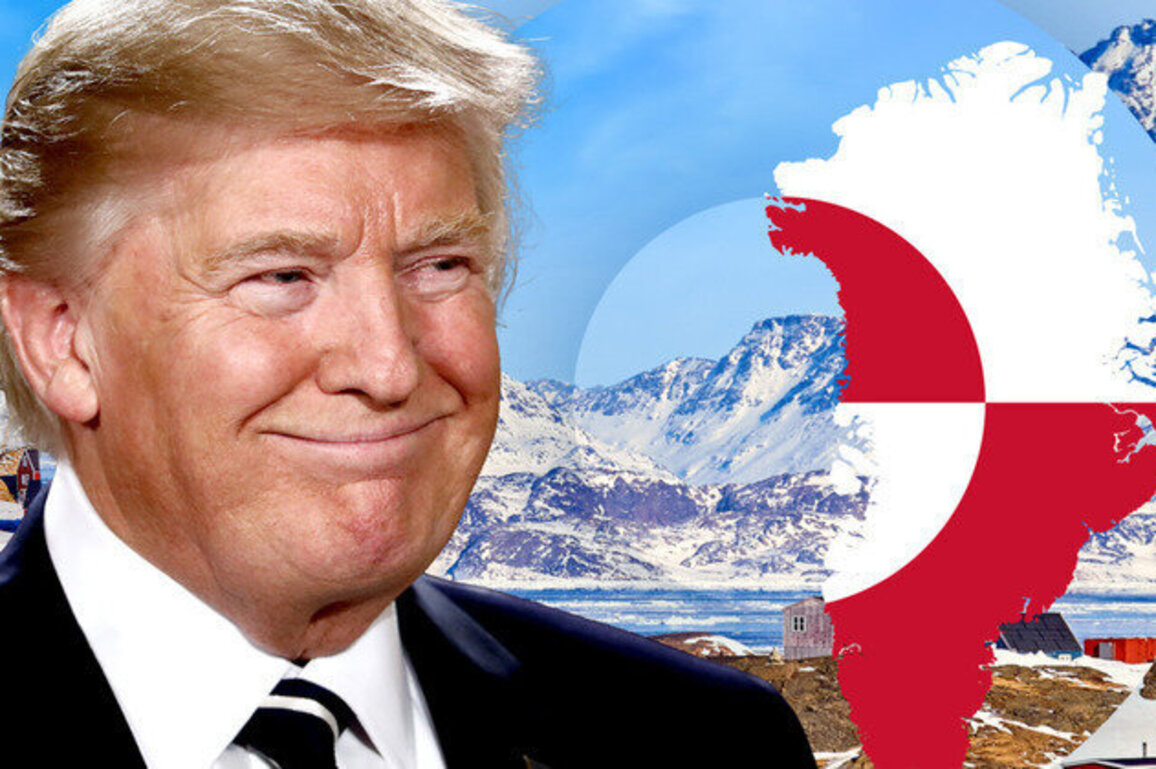
US PresidentDonald Trumpis considering "several options" to acquireGreenland,including "using the military", his spokeswoman Karoline Leavitt said on Tuesday, stoking further concern in Europe over the future of the Arctic island.
In ajoint statement,France,Germany,Italy,Poland,Spainand theUKvoiced support forDenmarkagainst Trumps claims over the semi-autonomous territory. "Greenland belongs to its people. It is for Denmark and Greenland, and them only, to decide on matters concerning Denmark and Greenland," the European leaders said, stressing that Denmark is aNATOmember like the United States and is bound to Washington by a defence agreement.
The statement followednew threatsfrom Trump.Speaking to The Atlanticlast week, the US president said it was up to observers to judge what the special forces operation inVenezuelawhich led to theouster of Nicolas Maduro and his wifemight mean for Greenland. They are going to view it themselves. I really dont know, he added.
Watch moreHow far will Trump go: Is Greenland next?
We need Greenlandfrom the standpoint of national security, andDenmark is notgoing to beabletodoit, Trump insisted, speaking to reporters aboard Air Force One on Sunday evening. Well take care of Greenland in about two months lets talk about Greenland in 20 days, he added.
Trumps renewed focus on the Arctic has sparked debate in Washington and abroad. Senior US officials, including Secretary of StateMarco Rubio, told lawmakers that the administrationwould prefer to negotiate a purchasewith Denmark rather than resort to force, though the option of military involvement has not been ruled out.
Trump had already expressed a desire to annex Greenland, a vast Arctic island home to some 57,000 people, during his first term. In August 2019, he told reporters he wanted to buy the territory from Denmark, calling it "essentially a real estate deal", followingreports by The Wall Street Journalon his interest in the island.
A land long sought after
The Danish province has been coveted for centuries. From the 10th century, Scandinavians began colonising the land, discovered in 982 by the Viking Erik the Red and previously inhabited byIndigenous peoples. Until the early 18th century,Norwayand Denmark contested its sovereignty. In 1814, when the two kingdoms separated, Greenland remained under Danish control under the Treaty of Kiel.
Watch moreGreenland, breaking the silence: The scandal of Denmark's forced contraception campaign
Meanwhile, the United States claimed Greenland as part of its sphere of influence. Under President James Monroes 1824 doctrine, Washington warned European powers against interfering in the affairs of the "Americas". From a US perspective, Greenland is North American, Mikaa Blugeon-Mered, a geopolitics researcher specialising in Arctic regions, told FRANCE 24.
A few decades later, the United States sought to annex Greenland. In 1867, it tried to acquire the island as part of a purchase including Iceland, but Denmark rejected the offer. The US instead acquired Alaska fromRussiafor $7 million.
From one war to another
DuringWorld War I, Copenhagen and Washington resumed talks. In 1917, the United States purchased the Virgin Islands (formerly known as the Danish West Indies) from Denmark for $25 million to secure the Panama Canal, while recognising Danish sovereignty over Greenland.
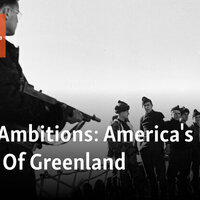
During Denmarks occupation by Nazi Germany, the United States invoked the Monroe Doctrine after losing contact with Greenland, which opposed any European expansion in the Americas.In April 1941, Washington signed a defence agreement with Denmarks ambassador in the US, despite instructions from his government-in-exile. The deal allowed American troops to be stationed on Greenland, effectively turning the island into a US protectorate. Several bases were established, including Thule Air Base, now known as Pituffik.
The scramble for Greenland: Can Danish dependency resist Trump pressure?
AfterWorld War II, President Harry Truman proposed buying the island in 1946 for $100 million, but Denmark refused.
During theCold War, Greenland proved strategically vital once again. The two countries signed a new agreement allowing the United States to strengthen its Thule base, which became a genuineUS militaryenclave. "If there had been an exchange of intercontinental ballistic missiles aimed at the United States, they would have passed over the Arctic. Thats why they created this base, which still exists today. It is their first line of defence," said Blugeon-Mered, author of Les mondes polaires.
Politics, strategy and resources
With this long history in mind, Blugeon-Mered said he was not surprised by the US presidents recent remarks. "Trump's 2019 proposal to buy Greenland attracted a lot of attention. Journalists called me, dismissing it as absurd, though it really isnt. The issue involves political, strategic and resource stakes," he said.
Withclimate changeand melting ice, Greenland now sits along newly accessible shipping routes that could shorten global trade routes. In January 2025, Trump expressed concern about Chinese and Russian activity in the Arctic region.
Read moreWar in Ukraine threatens geopolitical balance in the Arctic
You dont even need binoculars. You look outside, you have Chinese ships all over the place. You have Russian ships all over the place. Were not letting that happen, Trump said.
The territory, covering two million square kilometres and 85 percent ice, also contains vast mineral reserves, includingrare earthsessential for smartphones, computers and electric vehicles as well as untapped oil.
"According to the US Geological Survey, Greenland could hold hydrocarbon reserves equivalent to around 31 billion barrels of oil, roughly 15 percent of Saudi Arabias reserves," Blugeon-Mered said.
Accessing these resources, however, is expected to be difficult. "All foreign companies that have attempted to locate commercially viable or exploitable deposits have come up empty," the researcher added.
For Blugeon-Mered, "this geo-economic battle is becoming a geopolitical one". He added: When China takes an interest in Greenland, it is mainly for resources; when Russia does, it is primarily about strategic chokepoints. And when the Americans or Europeans are involved, all of these factors come into play.
Faced with such ambitions, Greenland has consistently insisted it is not for sale and wants to determine its own future. In January 2025, a poll published in the Danish and Greenlandic press found that 85 percent of Greenlanders opposed annexation by the United States, while only 6 percent were in favour.
This article has been translated from theoriginal in French.
Originally published on France24