

COPENHAGEN, Denmark (CN) - Just a few months ago, Danish Prime Minister Mette Frederiksen's grip on power looked shaky. Then U.S. President Donald Trump threatened to take Greenland.
Now, with less than a week to go before Denmark's parliamentary elections, left-leaning parties are in pole position to take power - including a likely third term for Frederiksen, despite her center-left Social Democrats facing the loss of 10 or more seats, according to opinion polls.
When Trump amped up his talk of acquiring the semiautonomous territory, Denmark's unpopular, ideologically divided coalition government was thrown into the kind of crisis it was created to handle - just months before its mandate was set to expire.
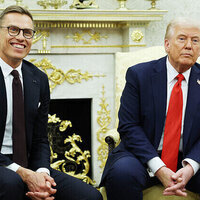
After the dust settled following Trump's announcement of a framework deal with NATO on the Arctic territory at the World Economic Forum in Davos, Switzerland, Frederiksen seized what looked like an opportunity to capitalize on her increased role in the public eye.
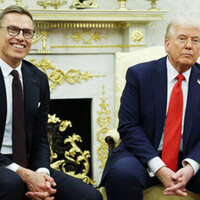
"The Social Democrats gained favor in the aftermath of the Greenland crisis (especially after the Washington meeting), and that probably motivated the prime minister to call out the election," said Troels Bggild, a lecturer at Aarhus University's Institute of Political Science, in an email to Courthouse News.
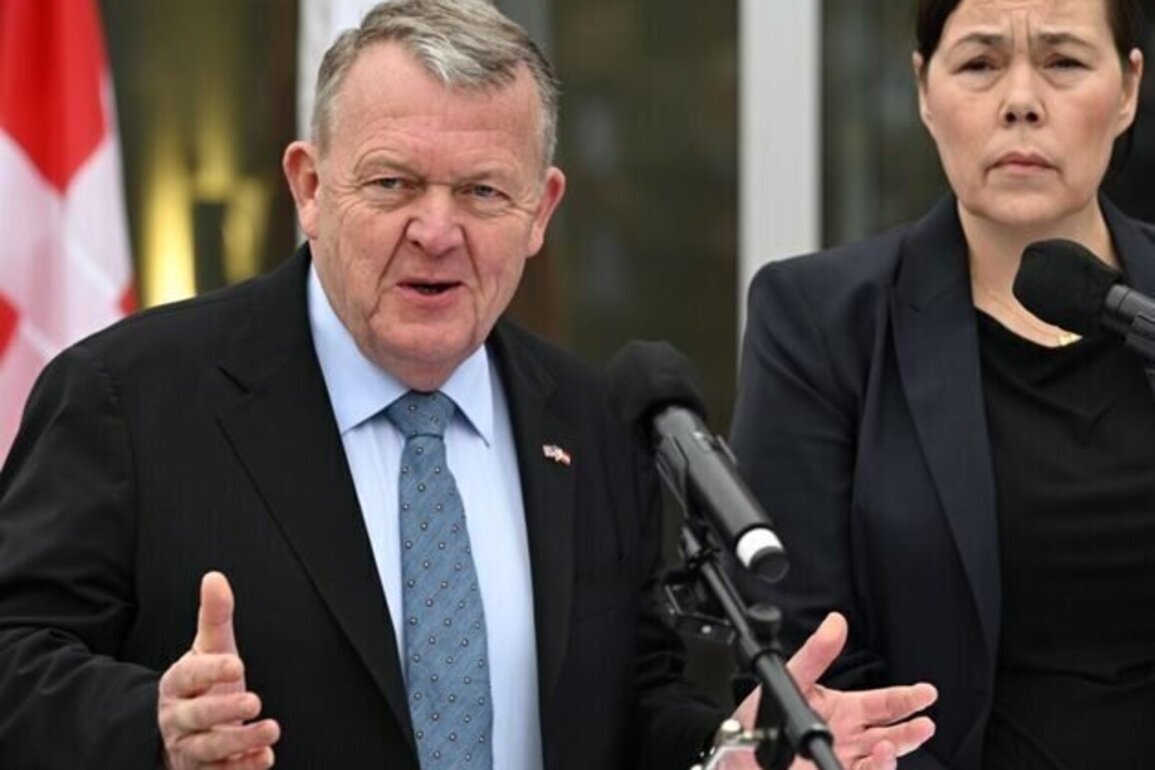
Foreign Affairs Minister Lars Lkke Rasmussen, of the Moderates, saw dismal numbers turn to better rankings in polls after his role in the White House meeting, according to the lecturer.
"The current government will not gain a majority again, but some of the same parties could be at play for a new coalition," Bggild said.
New coalition
In Danish politics, whoever can "count to 90" out of 179 seats can form a government.
Denmark's next government will not necessarily be a traditional grouping of smaller and larger parties that lean in the same direction. Frederiksen had that possibility in 2022, but she opted for a cross-party government, inviting longtime rivals the Liberal Party and Rasmussen's then-newly established Moderates.
It was an unpopular mix, with Frederiksen justifying its existence in the aftermath of Russia's invasion of Ukraine and fears of economic uncertainty due to geopolitical unrest. The left saw it as a missed opportunity, and the opposition saw a declaration of submission to its direct rival.
For the Liberal Party, the coalition was an opportunity to regain some power after years of soul-searching, following a muddy change of chairmanship. It was not well received among right-wing colleagues, who even this year are scouting for a leader to take the prime minister's office.
For Rasmussen and his newly established Moderates, it was a remarkable debut, years after his dramatic exit from the chairman post at the Liberal Party. The former prime minister could once again find himself a kingmaker this year.
The Faroe Islands and Greenland, both semi-autonomous territories in the Danish Commonwealth, each have two seats in the Danish Parliament, which have traditionally been left-leaning and can be a deciding factor in close elections. Such was the rare scenario in the previous election - if Frederiksen had decided to form a left-leaning government.
Her decision to instead form a centrist government contributed to falling public favor for the three parties involved. With what eventually proved to be a resilient Danish economy undermining the existential foundation of the coalition, the Liberal Party and Moderates dealt also dealt with internal party turmoil.
The Social Democratic powerhouse received a beating from left-wing voters at last year's municipal elections in December, signaling the center-left party might have leaned too far to the right for its voters.
Troels Lund Poulsen, the current defense minister and chairman of the Liberal Party, is seen as Frederiksen's direct competitor.
Out of the three governing parties, Poulsen has gained the least from Trump's Greenland endeavors.
An opinion poll in early March shows over 30% of 1053 respondents point to Frederiksen as the most suitable prime minister. Poulsen, in second place, received support from just over 9%.
As Trump ramped up attacks in Iran in the first week of the Danish election campaign, the parties struggled to get their messaging across in the midst of intense media coverage of the war in the Middle East.
This also means that Frederiksen and Rasmussen, with key roles overseeing Denmark's engagement in geopolitics, have received more exclusive media attention relating to the government's response to outside noise.
"It has taken a lot of focus from the election. It will probably mean stagnation in opinion polls if not a little rise for the government parties," said Bggild.
Role for Greenland, Faroe Islands
In Greenland, the Danish parliamentary election typically doesn't hold the same meaning for voters as the domestic front, said researcher Ulrik Pram Gad of the Danish Institute of International Studies, a specialist in Greenland-Denmark relations.
"The Danish parliamentary election functions as a midterm election that evaluates the Greenlandic election a year ago: Do 80% of the voters still stand by the parties that will 'quickly' move toward independence slowly because the most important factor is to avoid Trump? In that sense, the number of votes is more important than who exactly gets the mandates in Denmark," he said in an email to Courthouse News.
Recently, the Danish election has introduced unprecedented ramifications for Greenlandic politics, with disagreements over the practice of campaigning for seats in Denmark's Parliament while serving as ministers in Greenland's government.
The social democratic Siumut stepped back from the Greenlandic government coalition last week, with another party considering doing the same. According to observers, the latest development is not enough to threaten the Greenlandic government.
The two-seat election for the Danish Parliament in the Faroe Islands is likewise viewed as secondary by local voters, said Heini i Skorini, associate professor in the Faculty of History and Social Sciences at the University of the Faroe Islands, via video link from the capital of Torshavn.
Faroese politicians at large agree to refrain from interfering with Danish politics via their two seats, unless votes somehow affect the Faroe Islands.
"However, these mandates may be the decisive votes when it comes to the formation of a government in Copenhagen, deciding whether we're getting a left-wing or right-wing government or something in between, whether they [Faroese politicians] like it or not," said Skorini.
In parallel with the Danish election on Tuesday, Faroese citizens will vote for their own government just two days later.
Source: Courthouse News Service