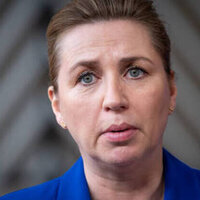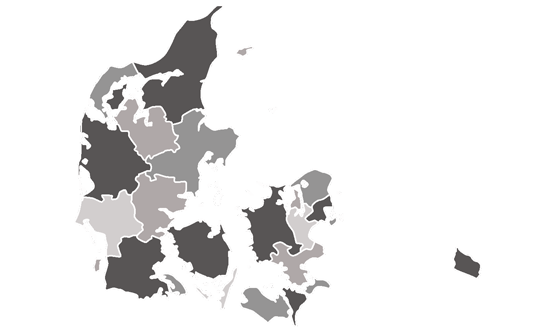



(CN) - Danish Prime Minister Mette Frederiksen began the difficult work of creating a new coalition Wednesday, after a splintered vote in national elections left no bloc with enough votes to form a government.
Denmark's biggest party, Frederiksen's Social Democrats, secured just 38 seats of 179 in Parliament in Tuesday's election, a loss of 12 compared to 2022. The result is the worst in over 100 years, echoing warnings from last year when the party lost its longtime grip on Copenhagen.
"Of course, there are some who are tired of me. There are also some who are happy for me. It is the parties in power that are retreating, but also the very same parties that have taken responsibility," Frederiksen said at the traditional party leader debate hosted by the National Press Club of Denmark on Wednesday. "I'm OK with this result; I'm also proud of what I've created with good colleagues."
The result leaves a fragmented Parliament, with powerhouse centrist parties losing significant backing, leveling the playing field for the fringes of the political spectrum. Observers called the election a possible reckoning of bloc politics, which has traditionally pushed Danish governments into one of two directions.
It was with an aim to limit foreseeable damage that Frederiksen called the election last month, following her government's handling of Trump's escalating Greenland threats earlier this year. Instead, the centrist foreign minister and former prime minister Lars Lkke Rasmussen seemed to capitalize on his turn on the international stage.
Rasmussen took a leading part in the Washington meeting with U.S. Vice President JD Vance and U.S. Secretary of State Marco Rubio earlier this year, contributing to the formation of a diplomatic group with Denmark and Greenland aiming to handle U.S. security concerns on the Arctic island.
Ninety seats are required to form a government. With the left-wing parties collectively holding 84 and the opposition 77, there is no way around Rasmussen's Moderates, who seemingly wish to exclude parties on the far wings, making a deal close to impossible.
Despite losing two seats, the former prime minister can, with his 14 seats, tip the balance of power to either side or aim to reconstruct an unlikely new centrist government.
"There's only one real winner in the election, and that is the Moderates," said Rune Stubager, professor of political science at Aarhus University, via a video connection from the capital of Copenhagen. "Even though they lost a few seats, they're in a position they really thrive in as the kingmaker party."
Rasmussen noted his party's remarkable comeback, as December polls suggested the Moderates would fail to meet the 2% threshold needed to stay in Parliament.
"One explanation is Donald Trump and the stage he put up around the issue of Greenland, a stage on which Lars Lkke Rasmussen, as foreign affairs minister, was able to perform and show his skills as a politician to the voters - or at least the perception of it," Stubager said.
Though geopolitical unrest clouded the start of the election campaign, issues concerning animal welfare in the production of pork, agricultural use of pesticides polluting tap water, and increasing energy prices eventually became the main themes.
Even with the loss, it was a motivated Frederiksen who assured her party that she aims to lead a third term as leader of a new government that will be unusually difficult to negotiate.
With support from her left-wing colleagues, Frederiksen was appointed royal examiner Wednesday afternoon to explore the possibility of creating a new coalition. Should she fail to gather enough support, the examiner torch could pass to someone else.
That could be her direct rival and current coalition partner, defense minister and leader of the Liberal Party Troels Lund Poulsen. He also faced his party's worst result ever, winning just 18 seats.
Rasmussen also sees himself as prepared for the negotiator role.
Frederiksen has refused to join a government unless she remains prime minister, and Poulsen said he can't support a new coalition with her as leader. A wing party is needed to separate the rivals, but Rasmussen remains steadfast.
The remaining territories of the Danish Commonwealth have voted for four seats in Denmark's Parliament, equally divided between Greenland and the Faroe Islands.
In the Faroese vote, the mandates were split between the Social Democratic Javnaarflokkurin and the center-right Sambandspartiet. Faroese politicians have, at large, deemed it unnecessary to keep the seats, as the semi-autonomous territory edges toward starting an independence process from Denmark.
In Greenland, the populist independence party Naleraq won its first seat in the Danish Parliament through an election, while the left-wing party Inuit Ataqatigiit kept its mandate.
In 2022, the four seats could have played a crucial role in forming a Danish center-left government, which Frederiksen refused to do, instead forming a centrist coalition with Poulsen's Liberal Party and the Moderates that eventually proved unpopular among voters. The North Atlantic mandates are unlikely to play a similar role this year.
It will likely take weeks before Denmark can introduce a new government, Stubager said.
Source: Courthouse News Service