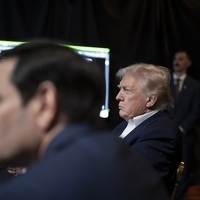


When President Donald Trumpannounced in a social media video onFebruary 28 that theUnited StatesandIsraelhad launched strikes on Iran, hekickstarted a warthat has engulfed theMiddle East.
But healso sparked an online information war that analysts say has beendominated by the use of AI-generated contentto spread fake news about the conflict
Onestudyfrom Clemson University in South Carolinafoundthat,within 24 hours of the US and Israel launching attacks onIran, dozens of social media accounts affiliated with the Islamic Revolutionary Guard Corps had begun posting Iranian propaganda about the war, some of which reached an audience of millions.
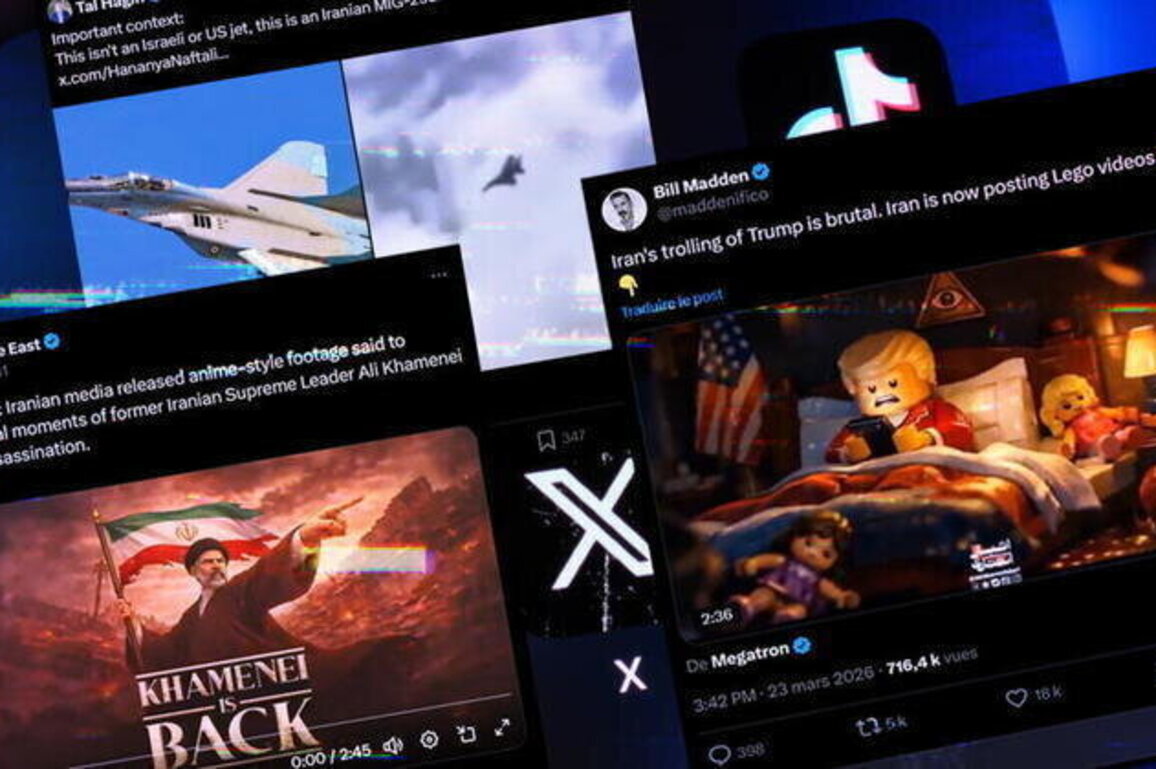
Among the most widely viewed content are AI-generated videos mocking Trump styled to reference Western media including the LEGO movies and the Teletubbiesand AI videos and photographs claiming to show the devastation Iranian strikes have wrought on Israel and the Gulf states.
Thepropagandaincludes memes and cartoons that aren't meant to be perceived as real but are very good at spreading political messaging, said Darren Linvill, author of the study and co-director ofClemsonsMedia ForensicsHub.
The deepfakesportray a version of reality that[seems]genuineand often paint Iran as more successful in the conflict. Both are being shared widely among communities that are critical of the war and hungry for this messaging.
Politically divisive
The accounts analysed in theClemsonstudy hadbeen used previously for Iranianinfluence operations designed to exploit regional fault lines to advance Iranian regime interests in the West by posting politically divisive content such as critiques of the recent USimmigrationcrackdown.
The switch to posting war propagandaon platforms including X,Instagramand Bluesky suggests that Iranquicklyoverhauled its social media strategy when the war with the US and Israel began.
As the conflict has spiralled over the past month, Iran has relied on both state media outlets and proxies to push its online message as a form of asymmetrical warfare with a view to targeting a US audience.
Read moreMiddle East war live: Iran rejects US ceasefire plan and offers counterproposal, state TV says
The Iranian regime wants to make the conflict as painful as possible for the US and Israel, and if they can target what support Trump and [Prime Minister Benjamin]Netanyahu have,it may ultimatelyshorten the war,Linvill said.
There is fertile groundin the United Statesfor messages critiquing military involvement in the Middle East.
Ipsos polling from mid-March found that US public opinion was overwhelmingly against the warin Iran, with58 percent opposing US military strikesand 78 percent against the idea of US boots on the ground.
In some cases,the Iranian regime does notneedto createoriginalor fake content to spread its message.
Clips oftheformer head ofthe USNational Counterterrorism Center, Joe Kent, being interviewed about hisresignation in opposition to the warwerewidely shared onlineby Iranian state media.
A ton of lies in a grain of truth
AI videos inparticular travel fast andplug into emotions that people alreadyhave, saidTineMunk,senior lecturer in criminology at Nottingham Trent Universityandaspecialist in digital warfare.
They create a lot of noise, even when they are so obviously fake because it is easy to communicate complex ideas through visual storytelling using these shared culturalreferences, he said.
But many of the photos and videos gaining traction onlinepurport to showevents on the ground that are harder to identify as fake.
Information warfare analyst Tal Hagin has been tracking these on X a platform wheredisinformationabout the war is rife.
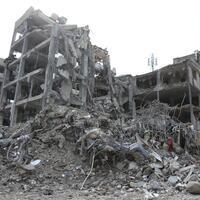
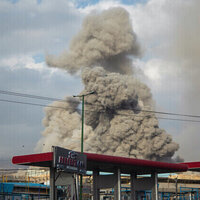
Among them arehundreds of examplesof videos and images showingIranian attacks on Israel that are either years old,ofattacks on different countries or areAI-generated.
There was a strike in Tel Aviv on February 28th, and the videos and photos of those strikes have been used every single day to allegedly depict new strikes, Hagin said.
The strategy is effective, he added, because the initial attack really did happen. Then they put a ton of lies into that grain of truth, so people dont know what the truth is anymore.
In addition, social media platforms are not fulfilling their commitments on labelling content and removing it if it is provablyfalse, said MelanieSmith, expertin information operations at the Institute for Strategic Dialogue.
Were seeing content get millions of views before it's proven to be AI and labelled as such.
Information battlefield
The current conflict in the Middle East is not the first time viral videos and memes have been used as a weapon of warthey are an establishedform of Ukrainian resistanceagainst Russian misinformation.
But the use of AI to generate wartime propaganda is a new development.
"This conflict is the firsttime we've really seen AI-generated content be used very intentionally to sow chaos and confusion around what's actually happening on the ground," Smith said.
Adding to the confusion are censorship rules restricting the flow of information out of both Israel and Iran.
In Israel, wartime censors haveprohibited the sharingof information deemed sensitive, such as the location of interceptor missiles.
Meanwhile, Iranhas imposed a full internet blackout, nowin its fourth week, making it extremely difficult for outsiders to know what is happening on the ground.
The result is a big information void that can be filled very quickly with synthetic content, propaganda narratives and generally chaoticinformation,Smith said.
Iran is surging forward on this informationbattlefield,said Munk. It's a broader war strategy where Iran cannot always dominatemilitarily,so it's focused on shaping perceptions to create doubt and uncertainty.
Trump has accused Iranof using AI-generated fake news as a disinformation weaponalthoughtheWhite Houseshared its ownheavily critiqued AI videocombining real footage of strikes in Iran with clips from action movies and video games.
Iran has been fairly successful, certainly more successfulthan the US and Israel, in reaching a broad audience and gaining more support than they might otherwise have, Linvillsaid.
Originally published on France24