

(CN) - Norway scored a win Tuesday at Europe's top human rights court after a group of young climate activists challenged its Arctic oil plans.
The judges found that while the country's licensing system wasn't flawless, it still offered enough safeguards to protect human rights and the environment.
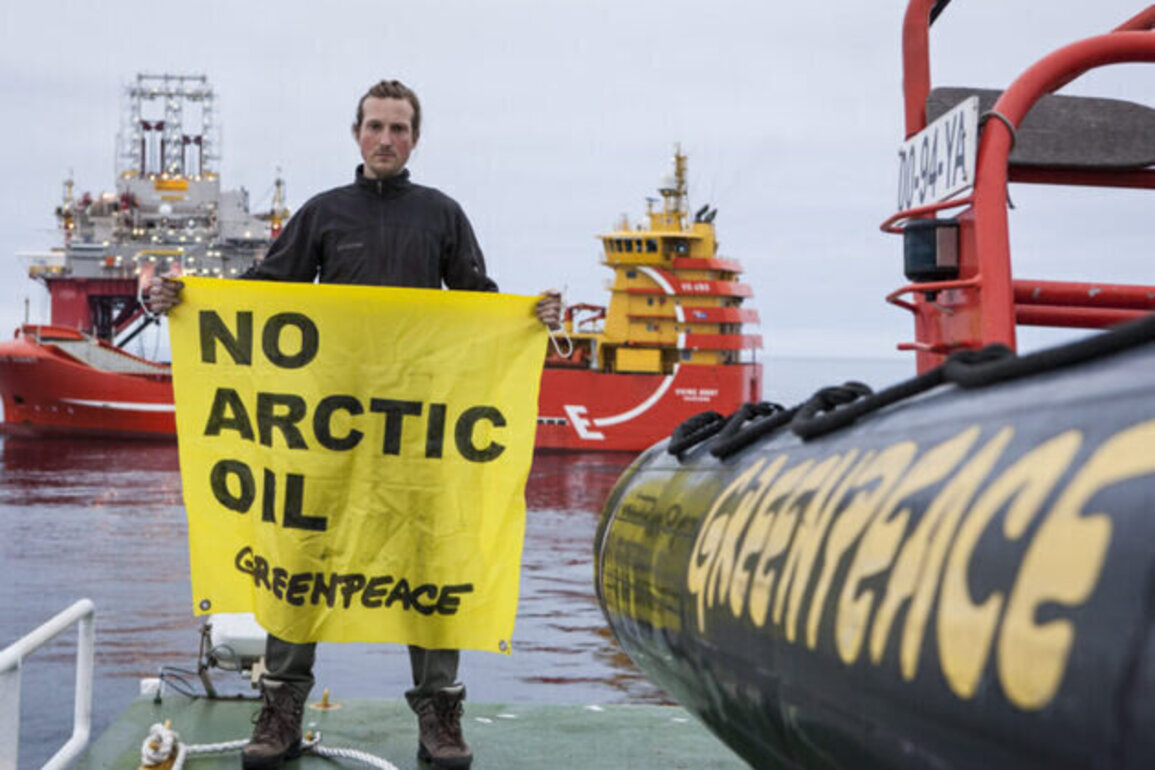
The case was filed by six young Norwegians, backed by Greenpeace Nordic and Young Friends of the Earth, over the government's 2016 decision to open new oil and gas exploration areas in the Barents Sea. They argued that by expanding fossil fuel development in the Arctic, Norway was putting their futures at risk and failing its duty to protect people from the worsening impacts of climate change.
For the young activists, most of them born in the 1990s, the lawsuit was an attempt to push Norway's courts and eventually Europe's to draw a clear line between climate policy and human rights. They said they had grown up seeing the effects of a warming world: shorter winters, melting glaciers and smoky summer skies. If Norway could keep approving new oil projects without fully weighing their climate impact, they argued, then future generations would bear the cost.
Reviewing Norway's climate reviews
That question, how far a state's duty to protect against climate harm should go, was at the heart of the case the European Court of Human Rights examined in Strasbourg. The judges ultimately took a different view, saying Norway's approval system already had enough checks in place to prevent serious harm.
Exploration and production happen in separate phases, and no drilling can begin until a full environmental review and public consultation are carried out later on. Any shortcomings in the early stages, the court said, could still be fixed at the final approval phase.
The court acknowledged that the 2016 review wasn't perfect and skipped over some big questions, like the long-term climate impact and emissions from exported oil. Still, it found that Norway's overall system met its human rights obligations.
Norway requires its own environmental checks, public input and legal oversight at each step in the petroleum process - from opening new areas to licensing and finally to production - which the judges said were enough to keep the process on solid ground.
Because of those safeguards, the judges said any early gaps could be corrected later. They also pointed out that the exploration licenses didn't let companies start pumping oil or guarantee that extraction would ever happen. The risks tied to those permits, they found, were too uncertain and too far in the future to amount to a human rights violation.
No immediate threat
Petra Minnerop, an international law professor at Durham Law School, said the court's approach largely came down to trust in Norway's pledge to carry out a full environmental review later on.
The judges emphasized the need for any review to rely on current, reliable data, and to consider the combined impact of all future projects together.
But Greenpeace Nordic says Norway falls short in practice. Legal campaigner Klimentina Radkova said the court's assumption that full climate reviews take place at the final approval stage "is not done for any new oil and gas projects on the Norwegian continental shelf today," adding that the group is challenging that gap in a separate case over three North Sea fields.
The court also drew a sharp line between this case and earlier climate rulings that dealt with governments allowing pollution that posed an immediate danger to people's lives. In Norway's case, no drilling had been approved and no real environmental harm had occurred. Human rights protections, the judges explained, only apply when a government's actions create a clear and immediate threat - and opening exploration areas didn't cross that line.
The activists argued that Norway should have counted the climate impact of oil burned overseas, saying pollution doesn't stop at the border. But the court wasn't convinced. It found that those global effects were too uncertain and too far removed to factor in at the licensing stage. The judges added that international law still doesn't offer clear rules for how to measure or assign responsibility for such emissions.
In the end, the court concluded that Norway had met its duty to protect against environmental harm. The judges said the country's process respected the procedural safeguards required under human rights law and found no breach, dismissing the rest of the activists' claims.
Professor Christina Voigt, an international environmental law expert at the University of Oslo, said the ruling made clear that governments can't greenlight high-risk projects without first doing their homework. The court, she noted, confirmed that states have a human rights duty to conduct an "adequate, timely and comprehensive" environmental impact assessment that covers all greenhouse gas emissions, including those generated abroad.
Maria Antonia Tigre, who leads global climate litigation at Columbia University's Sabin Center for Climate Change Law, said the decision goes further by defining what that duty looks like in practice. She pointed out that the court now expects assessments to be carried out "in good faith and based on the best available science before approving any potentially dangerous activity that might aggravate climate harm," marking the first time judges have explicitly linked climate reviews to human rights obligations.
Activists hail procedural victory
Some experts said the ruling still leaves big questions about how young people can seek justice in climate cases.
Liesl Muller, a human rights lawyer and researcher at University College Cork, said the court continues to struggle with how to address children's rights in this context. She noted that the European Court of Human Rights "accepts a low standard for environmental impact assessments, leaving crucial aspects for a later phase and without any special consideration for children." That gap, she added, makes it harder for young people to challenge governments when climate policies fall short.
In a statement to Courthouse News, the Norwegian Society for the Conservation of Nature - which supported the youth applicants through its youth branch - said the ruling was a positive step even without a formal win. The group welcomed the court's finding that states must assess all greenhouse gas emissions from oil and gas projects, "even if the oil and gas are sold to other countries," and called on Norwegian authorities to finally uphold that obligation.
A spokesperson for the Norwegian Ministry of Energy welcomed the ruling, saying that "the court clearly establishes that we are not violating human rights, and that climate considerations are being safeguarded in a solid and democratic manner through the extensive processes from licensing to potential production."
Wrapping up more than a decade of litigation that began when Norway expanded its Arctic oil zones in 2013, the ruling underscored that the court's role is not to second-guess a country's climate policies, but to ensure that its decisionmaking process meets human rights standards.
The ruling isn't set in stone just yet. The parties have three months to ask for a rehearing before the court's Grand Chamber, which only takes on exceptional cases that raise major legal questions. If that request is denied, the decision becomes final.
Courthouse News reporter Eunseo Hong is based in the Netherlands.
Source: Courthouse News Service