

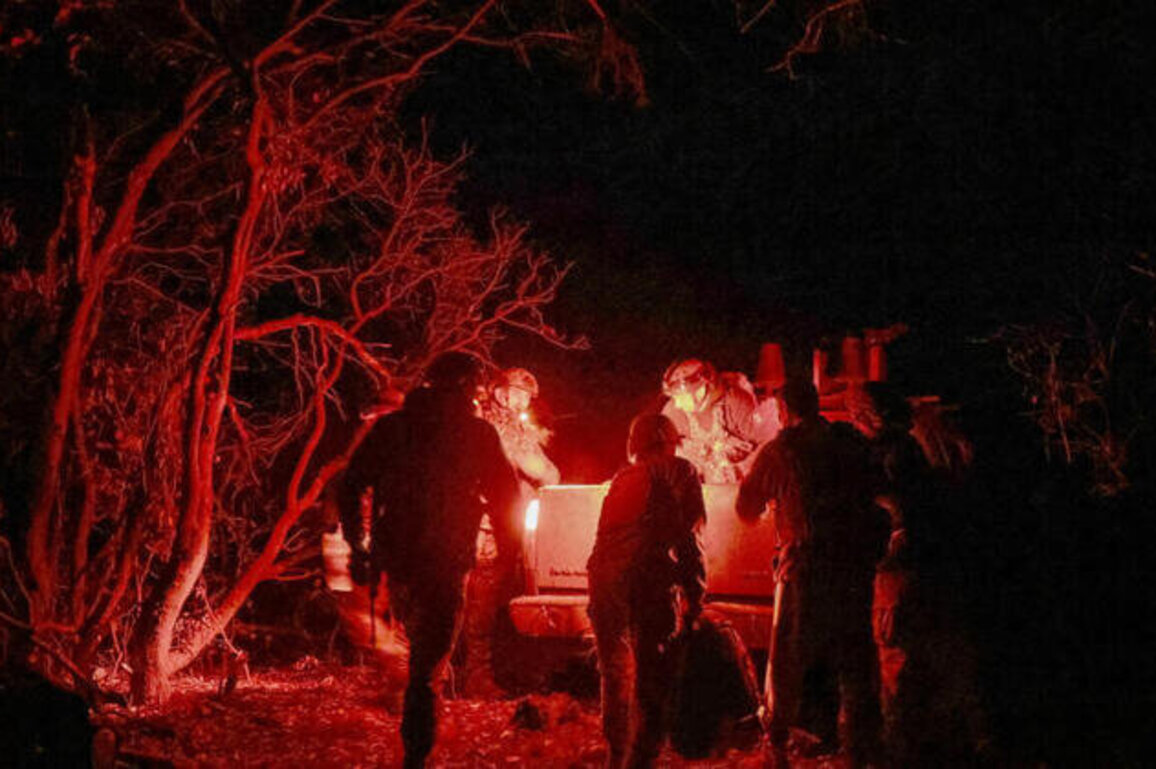
Russian and Ukrainian troops are locked in a desperate fight in the ruins of Pokrovsk, a road and railway hub at the heart of the Donets River coal basin. The near-emptied city has been the target of a grinding Russian offensive for more than a year and one that has exposed the struggle Kyiv faces in manning a front line stretching some 1,250 kilometres.
Squatting on a road and rail hub inDonetskcoal country, the city of Pokrovsknow stands nearly empty. Once home to more than 60,000 people, many employed in theminingand metallurgy industries that theDonbashas long been known for, Pokrovsk has been largely evacuated ahead of the grinding advance of Russian troops.
For more than a year, Ukrainian forces have fought off the Russian offensive. Now, soldiers from both sides fight building-to-building in the bombed-out town, withRussiaon Wednesday claiming it had completely surrounded the last pockets of Ukrainian resistance. Kyiv, whichsent special forces to the besieged cityover the weekend as Moscow's forces closed in, denies that its troops have been encircled.
Maria Engqvist, an analyst and director of the Swedish Defence Research Agencys Russia and Eurasia Studies Programme, said that the near-empty town still holds significant strategic and symbolic value to Kyiv.
A Russian seizure of Pokrovsk would open [the door] for future Russian offensive operations towards, for example, Kramatorsk or Sloviansk, or westward towards Pavlohrad, due to its location, she said. Furthermore, a Russian capture of Pokrovsk would see the most significant symbolic gain sinceAvdiivka in 2024. This, in turn, will bring political implications on both sides.
Read moreIn Ukraines Avdiivka, divided loyalties after nearly a year of Russian assault
Russia has been fighting to seize the town since mid-2024, seeing it as a crucial stepping stone to secure the last 10 percent of the Donetsk region some 5,000 square kilometres that remain beyond its reach. To do this, Russian forces would have to break through what hasbecome known as Donetsk's "fortress belt"a string of industrial cities stretching north to south from Sloviansk to Kostiantynivka that have been heavily fortified against any Russian push.
Once a major artery of the industrial heart of theSoviet Union, thecollapse of these cities' heavy industrieshas nevertheless left a 50-kilometre network of tightly clumped towns, steelworks and factories thatUkrainehas spent more than a decade building up into militarised strongholds. If Pokrovsk, which sits on a road and railway junction southwest of the belt, were to fall, the thinking goes, the region's remaining major cities will be open to being surrounded and swallowed up.
But Emil Kastehelmi, a military analyst at the Finland-based Black Bird Group, said the loss of Pokrovsk would not in itself pose an existential threat to Ukraine's remaining defences in Donetsk.
Of course, if the Russians manage to capture Pokrovsk and Myrnohrad then they can move forward with their offensive. As long as the fighting is happening in the Pokrovsk direction, it does tie a lot of Russian troops in the area while they are fighting in that sector, the Russians will only make gradual and slow progress elsewhere in Donetsk, he said.
But then if we look at a map, capturing Pokrovsk doesnt really mean that the Russians have a new, significantly improved avenue of approach towards the last key cities, he added.
They are still relatively far away, and the Russians have to take a lot of land before they can threaten these cities. The fall of Pokrovsk doesnt equal that Sloviansk and Kramatursk are in a very dire situation.
More concerning than the prospect of Pokrovsk's capture, perhaps, is the way in which Russian troops have been able to seep through the city's defences. Kastehelmi said that seeing mechanised columns of tanks and armoured troop carriers chewed up by Ukrainian mines and drones in the war's early sieges had taught Russia's military strategists a sharp lesson.
As the war has progressed, Russians have adapted, he said. [In] the current environment, where the battlefield can be digitally scanned in great depth, it really makes massed mechanised assaults difficult. So if the Russians are trying to, for example, concentrate mechanised forces somewhere, they will most likely be spotted and even hit before they can actually reach the target.
Instead, Russia has been sending small infantry squads sometimes as few as three to five riflemen, and sometimes mounted on motorbikes to infiltrate the hollowed-out town under heavy drone cover.
Michael Kofman, a military analyst and senior fellow in the Carnegie Endowments Russia and Eurasia Program, said that Ukraine's "structural manpower deficit" had left its increasingly porous lines vulnerable to these scattered assaults.
Russian forces adapted by focusing on small infantry group tactics, light motorised assaults, and infiltration, he said. This approach has been costly, but resulted in a creeping offensive.
Russia also deployed its own elite drone units, "which moved the drone engagement zone more and more over Ukrainian forces, reducing their main advantage in the war, he said.The advance on Pokrovsk"is a combination of the two, as most losses are inflicted by drones and infantry rarely enters into combat with other infantry units.
Kastehelmi said the Russians' new approach exploited the widening gulf between the manpower that each country was able to bring to bear.
The downside of this is that Ukraine simply doesn't have the means to kill enough Russian soldiers in a way that it would decisively attrite the attacking forces, he said. The losses are heavy for the Russians, but they can still replace them by recruiting new troops without having to actually conduct a new round of mobilisation. So the Russians are playing to their strengths, I would say. They can spare this manpower at least at this stage.
Ukraine, on the other hand, has struggled to marshal the numbers that it would need to match the forces of its more populous neighbour. Although Engqvist said that Russia's larger population and a front line that stretched more than 1,200 kilometres was always going to put pressure on Ukraine's defences, Kyiv has also had a hard time mobilising what it needed to plug the gaps.
The Ukrainian shortage of manpower has been an issue already for some time, Engqvist said. It is a politically sensitive question in Ukraine, since the implications of a major mobilisation are deemed by many Western and Ukrainian analysts to be severe. For the Ukrainian leadership, it has perhaps become an unsolvable cost-benefit equation.
Read moreUkraine divided over controversial mobilisation bill
Drafting more men into the fight has become increasingly politically charged in Ukraine as the Russian invasion approaches its fourth year. When the war first broke out, PresidentVolodymyr Zelensky's declaration ofmartial lawbanned men from 18 to 60 from leaving the country, although men under the age of 27 were largely exempt from being conscripted.
That age has since been lowered to 25. Zelensky vocally rejected calls from US officials in the administration ofJoe Bidentolower the conscription age to 18, saying that sending the country's youth to the front would damage an already fragile economy.
Despite this, widely shared videos of draft officers dragging potentially eligible men from the street to be sent to army recruitment centres dubbed "busification" in Ukraine expose rising tensions aroundthe efforts to which authorities will goto send more men to the front.
Earlier this month, 43-year-old Roman Sapindied from a severe head injuryin a recruitment centre from what authorities maintain was a bad fall a version of events that his family and lawyer reject. Just days before, two police officers were charged after being filmed beating and kicking a man outside a district recruitment centre.
Polish border authorities alleged in October thatalmost 100,000 Ukrainian menbetween 18 and 22 have crossed into the country since Zelensky eased restrictions on men under 23 leaving Ukraine in August.
Kastehelmi said that Ukraine's struggles regarding manpower likely went back as far as mid-2023.
Ukraine is suffering from something I call a chronic manpower issue They can get people to the front in a way that the defence has to bend, but doesn't really crack, he said. With the current amount of infantry, and their enhanced drone capabilities, they can keep the front in order, denying Russians any swift movement. Even though the Russians can do these gradual advances, they cant really conduct breakthroughs in the true sense of the word.
But he said the Ukrainian military doesn't have the troops it needs to stave off Russia's creeping push.
Ukraine can repel worst-case scenarios, but down in the southeast they cant really stop the Russian advance.
Originally published on France24