

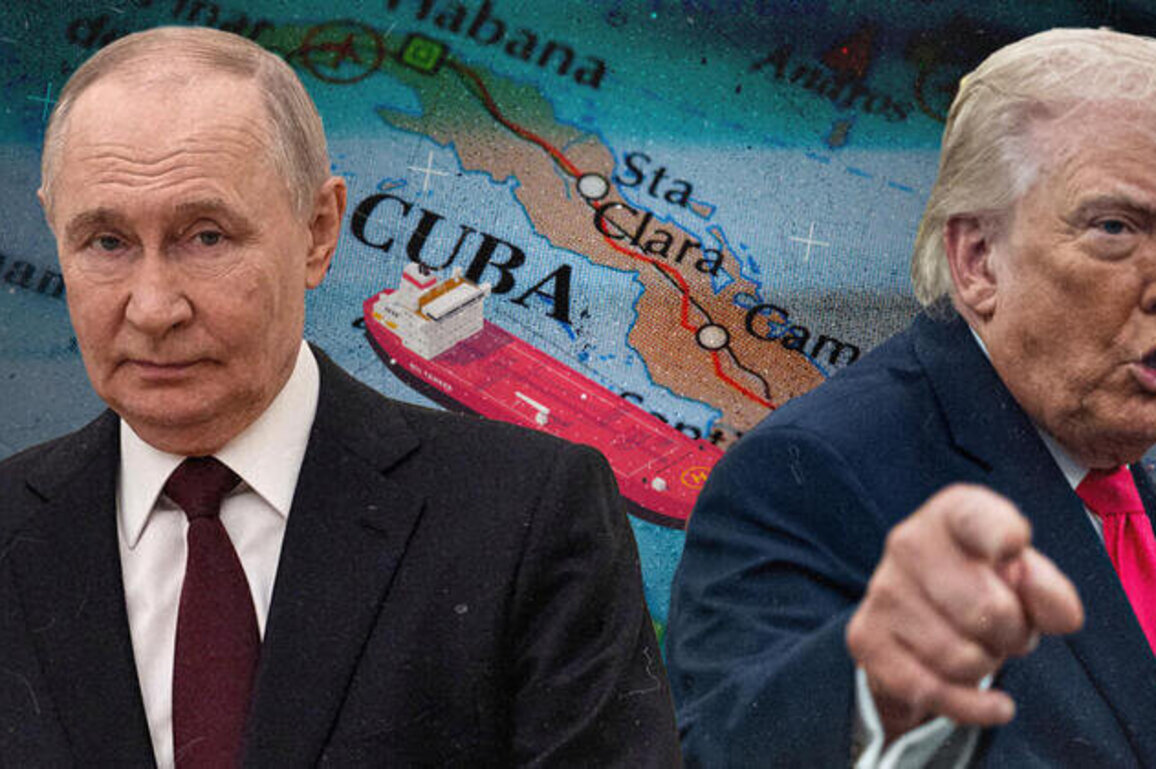
Russian Energy Minister Sergei Tsivilev confirmed Wednesday thatRussia is providing fuel shipments to Cuba, saying, We are sendinghumanitarian aid. We are providing humanitarian support, and that the move is intended to help the island cope with severe shortages caused by a US blockade. In January, the Trump administration halted the subsidised Venezuelan oil shipments that had kept the Cubanenergygrid running.
The Anatoly Kolodkin oil tanker, which left the Russian port of Primorsk on March 8, is expected to reach its destination on Thursday. It initially listed Atlantis as its destination likely a reference to a marina in Boston, according to the MarineTraffic website but its current trajectory and increasingly patchy tracking data point elsewhere.
Earlier this month, maritime trackers indicated that a differentRussian tanker likely delivered diesel to Cuba, suggesting that the Kolodkin is just the latest fuel shipment aimed at alleviating the islands energy shortage.
Analysts note that the vessel is already under USsanctions, accused of being part of Russias network for bypassing restrictions on its energy exports. Earlier speculation suggested possible diversions to Trinidad and Tobago orVenezuela, butCubanow appears to be the confirmed destination.
A limited cargo, a larger signal
A successful fuel delivery to Cuba would have geopolitical significance beyond its immediate impact. The tanker is transporting around730,000 barrels of crudeenough to supply the island for several weeks at a time when Washington is tightening efforts to restrict fuel flows to Havana.
Cuba, which previously relied on Venezuelan oil for roughly 60 percent of its energy needs, lost that supply after the US military raid on then presidentNicolas Maduro.
The US strategy is clear: by limiting oil supplies, Washington aims to deepen Cubas economic crisis and increase pressure on its government. A fuel delivery would expose the limits of that approach.
Organised by international groups and activists, severalaid shipmentscarrying solar panels, food, bicycles and medical supplies have also reached Cuba. The humanitarian aid deliveries highlight the breadth and severity of Cubas humanitarian crisis.
Cuba is in the midst of its worst fuel shortage in years. So this shipment of crude oil could buy Cuba a couple of weeks after refining, said Basil Germond, a maritime security specialist at Lancaster University.
Germond noted, however, that the shipment would not solve the structural, longer-term crisis and noted that: Russias motives look more geopolitical than altruistic.
Moscow raises the stakes
Unlike earlier shipments routed through vessels flying flags of convenience, the Anatoly Kolodkin is openly Russian-flagged and was briefly escorted out of European waters by a Russian naval frigate, signalling a shift in Moscows tactics.
Such visibility appears deliberate.
This seems to confirm that this vessel likely aims to deter or test [the]US interdiction. A Russian-flagged vessel with a naval escort (even if short-lived) acts as a tripwire signal: interfering with this vessel would escalate from sanctions enforcement to a direct confrontation with a Russian asset. This is state-to-state, not clandestine commerce. Thus, it becomes a strategic signalling operation, not simply an oil delivery, Germond said.
Assistant professor Yevgeniy Golovchenko at the University of Copenhagen also noted that Moscow is trying to send a signal, perhaps looking to poke at the US.
If the US boards this tanker while it has a Russian flag ... then the US would be blatantly and openly violating international agreements, he said.
A difficult US response
That calculation complicates the US response. Interfering with a sanctioned vessel in international waters is legally and politically sensitive particularly one openly linked to Russia.
US sanctions (without a UN Security Council resolution) do not provide automatic authority to seize a foreign vessel in international waters or third-party waters ... this would be considered as an act of state-to-state aggression by Russia, Germond said.
Read moreRaulito Castro, the Trump administrations wild card in Cuba
For Moscow, the mission carries limited downsides. If the oil reaches Cuba, it reinforces Russias image as a strong partner able to support allies and challenge US influence in the Western Hemisphere. If it does not, the tanker could still serve as leverage.
The Kremlin hasreaffirmed its supportfor Havana while the US continues to apply political and economic pressure on the island amid reportedtalks with Havana.
There's a good chance this [oil shipment] is some sort of bargaining position in order to put pressure on the US, said Jeff Hawn, a Russia specialist at the London School of Economics.
Hawn noted that a stark split exists within the US administration among those focused on Cuba, those focused on Iran, and those who want to make peace with Russia.
For Moscow, he said, This is most likely a way to try to extract some sort of accommodation from Washington by basically saying, Look, we're going to give Cuba oil unless you do something we want.
Enforcement or Escalation
Washington has already moved to tighten its blockade,adding Cuba to the list of destinationswhere Russian oil deliveries are explicitly prohibited. But its options remain constrained.
US forces could shadow the vessel to ramp up the pressure, analysts say, but stopping or seizing it outright lacks a legal basis and would risk escalating tensions with Moscow.
As the tanker nears the Caribbean, Washington is facing a familiar dilemma: a heavy-handed enforcement of its blockade that risks confrontation or allow Russia to breach it, thereby undermining the overall US strategy in the region.
This article was adapted from theoriginalin French by Natasha Li.
Originally published on France24