


(CN) - The conservative People's Party has emerged victorious in the latest Faroese elections, winning nine out of 33 seats in the territorial parliament.
The party's chairman, 29-year-old Beinir Johannesen, now looks set to become the youngest ever prime minister of the Faroe Islands, an autonomous territory of the Danish Commonwealth that's located about halfway between Scotland and Iceland in the North Atlantic Ocean.
Beinir Johannesen comes from a political family. His uncle, the Social Democratic Prime Minister Aksel V. Johannesen, called elections last month after three years of friction with government colleagues, including the left-wing Republican Party and the center-right Progress Party.
As for the younger Johannesen, he inherited leadership of the People's Party after its former chairman left in 2022. The conservative leader has navigated his party in a remarkable comeback: After not even being part of the previous government coalition, the party won the most seats during elections Thursday and will now run the Faroese government.
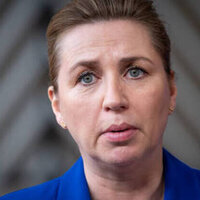
This comeback arrives just days after Social Democrats in mainland Denmark saw their worst election results in more than 100 years. On Wednesday, Danish Prime Minister Mette Frederiksen of the Social Democratic Party began the hard work of trying to cobble together a ruling coalition.
So far on the Faroe Islands, the winning People's Party has signaled it wants to build a broad coalition government featuring both right- and left-wing parties. Such a move could also prevent bickering in the long run, as the conservative bloc holds a fragile majority.
In many ways, the Faroe Island's geography and politics mirror those of Greenland, another Danish territory.
The islands sit in the so-called GIUK gap, a naval chokepoint that could play a prominent role in future geopolitical conflicts with countries like Russia. The acronym GIUK stands for "Greenland-Iceland-United Kingdom."
Just like in Greeland, many Faroe Islanders are itching for increased autonomy.
A clear majority of Faroese parties advocate for starting some form of independence process. That would not necessarily mean leaving the Danish Commonwealth, but it would mean making sure Faroe Islands have final say over issues like foreign affairs and defense policies without involvement from Copenhagen.
With independence such a popular issue in the Faroe Islands, it ironically took a back seat in political campaigns this year.
After all, it's hard for a political party to distinguish itself on an issue when most other parties also agree.
Nonetheless, independence will remain a major political theme on the islands, said Heini i Skorini, a history and social sciences professor at the University of the Faroe Islands.
"With five out of six parties agreeing to take the next step in negotiating independence, I expect that there will come a greater focus on the issue compared to how it was in the election," he said in a phone interview.
Instead, political campaigning this year focused on other issues, like the local housing crisis. Younger people are struggling to afford homes, even as older and richer Faroese buy up multiple properties to use as vacation rentals.
The Faroese housing market is "extremely difficult for young Faroese to get into," Skorini explained. "Those difficulties are just as hard for educated, newly established families returning home from Copenhagen [and] trying to buy a house."
Another issue: finding ways to keep young people on the islands. Around 40% of Faroese move abroad by their mid-20s, and about one in five never return.
Although this little archipelago of around 55,000 has a healthy economy, an overwhelming amount of its exports - around 95% - come from the fishing sector. Russia used to be its biggest customer, but the Faroe Islands have reduced business with Russia significantly since its invasion of Ukraine.
As the United States openly mulls buying or taking over Greenland, Russia isn't the only global power drawing attention here. U.S. vessels have become a frequent guest on the horizon as both the Biden and Trump administrations have sought to increase partnership.
Meetings between U.S. and Faroese officials have raised eyebrows in mainland Denmark, where some observers say the country must pay more attention to the wishes of Faroe Islanders. Under the current Danish constitution, military and security deals cannot happen without Copenhagen's participation.
Source: Courthouse News Service