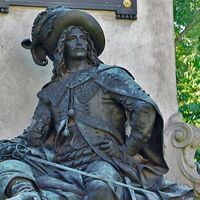


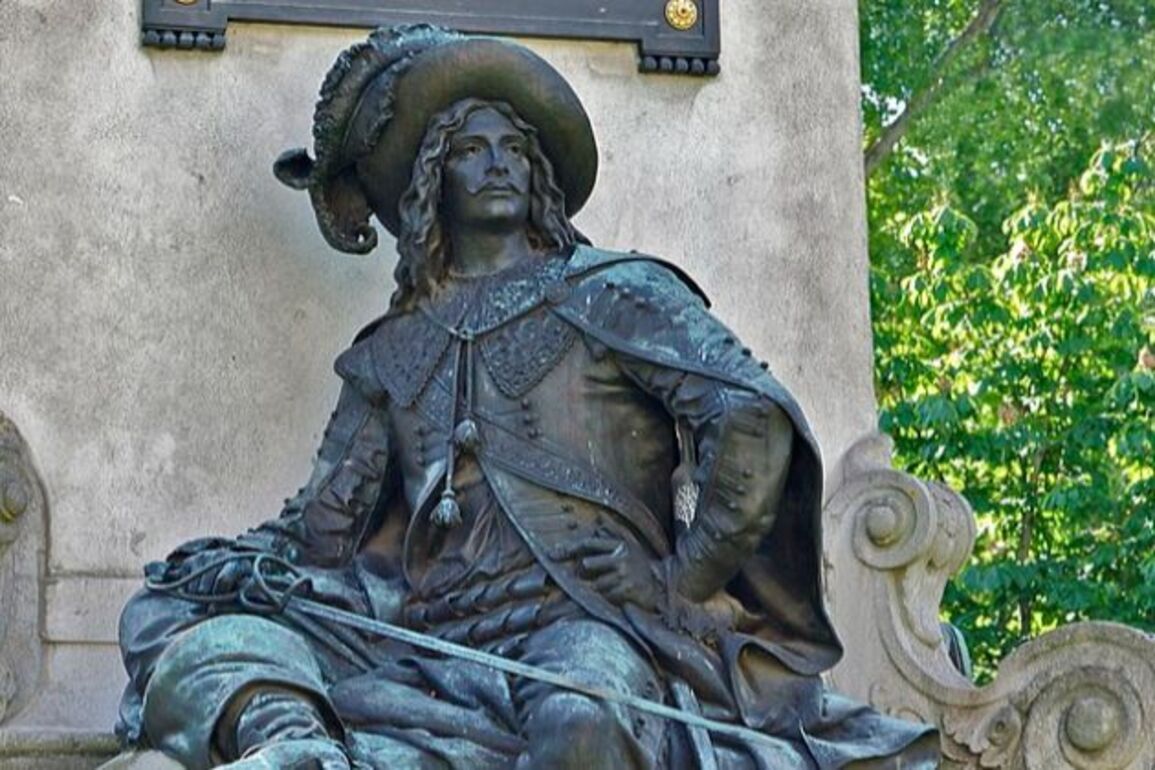
AMSTERDAM, Netherlands: A grave in front of a church altar in the Dutch city of Maastricht in the Netherlands, could well hold the remains of famed French musketeer Charles de Batz de Castelmore d'Artagnan.
An archaeologist said that workers discovered a grave containing human remains beneath tiles after part of the floor of St Peter and Paul Church subsided in February, triggering a race to identify the skeleton through DNA testing.
"This has truly become a top-level investigation, in which we want to be certain — or as certain as possible — whether it is the famous musketeer, who was killed here near Maastricht," archaeologist Wim Dijkman told Reuters.
The church had earlier been suggested as a possible burial place of the 17th-century soldier. Now, DNA taken from a jawbone is being compared with DNA from his descendants.
A fictional version of d'Artagnan appears in Alexandre Dumas' 1844 novel The Three Musketeers, where he is shown as a bold young man who becomes a musketeer. But d'Artagnan was also a real historical person.
Like in the story, the real d'Artagnan served Louis XIV and later became a top officer of the musketeers. He died on June 25, 1673, during the Franco-Dutch War, when he was shot in the throat at the siege of Maastricht.
The church is close to where the French army had camped. Even though he was seen as a hero, it would have been hard to take his body back to Paris in the summer heat.
Deacon Jos Valke said other clues were found, including a coin from around 1660 and part of a lead bullet at the burial site.
A letter from that time said d'Artagnan was buried in holy ground. Valke said being buried under an altar would fit that description.
He added that, together, all the clues make it seem possible, but nothing is certain yet.